
2026 Best Ultra High Temperature Servo Motor Suppliers

Industrial automation is moving into hotter, faster, and more demanding operating environments. The International Federation of Robotics reported 541,302 industrial robots installed worldwide in 2023, confirming sustained demand for accurate motion systems. This growth also exposes a practical challenge: standard servo motors often lose insulation life, encoder stability, and lubrication performance under extreme heat.

An Ultra High Temperature Servo Motor must be judged beyond its catalog temperature rating. Engineers should examine winding insulation, bearing materials, feedback technology, sealing methods, cooling design, and continuous torque performance. MarketsandMarkets’ Servo Motors and Drives Market report identifies expanding automation, robotics, and precision manufacturing as major market drivers. These trends support stronger demand for specialized servo suppliers, especially in semiconductor equipment, aerospace testing, glass production, metal processing, and downhole tools.

Heat changes everything. Claims need proof.

This 2026 supplier overview focuses on manufacturers that provide measurable thermal data, application engineering, testing evidence, and dependable after-sales support. IEC 60034-1 offers a useful reference for motor performance and thermal considerations, but high-temperature applications often require additional validation under real duty cycles. Buyers should request temperature-rise curves, insulation-class details, encoder limits, torque derating charts, and service-life assumptions. A supplier may appear impressive online yet provide limited evidence for continuous operation above its stated rating. That weakness deserves attention. No supplier ranking is perfect, because temperature, load, speed, mounting, and maintenance conditions vary widely. The strongest choices combine verified engineering experience with transparent documentation and practical field support.
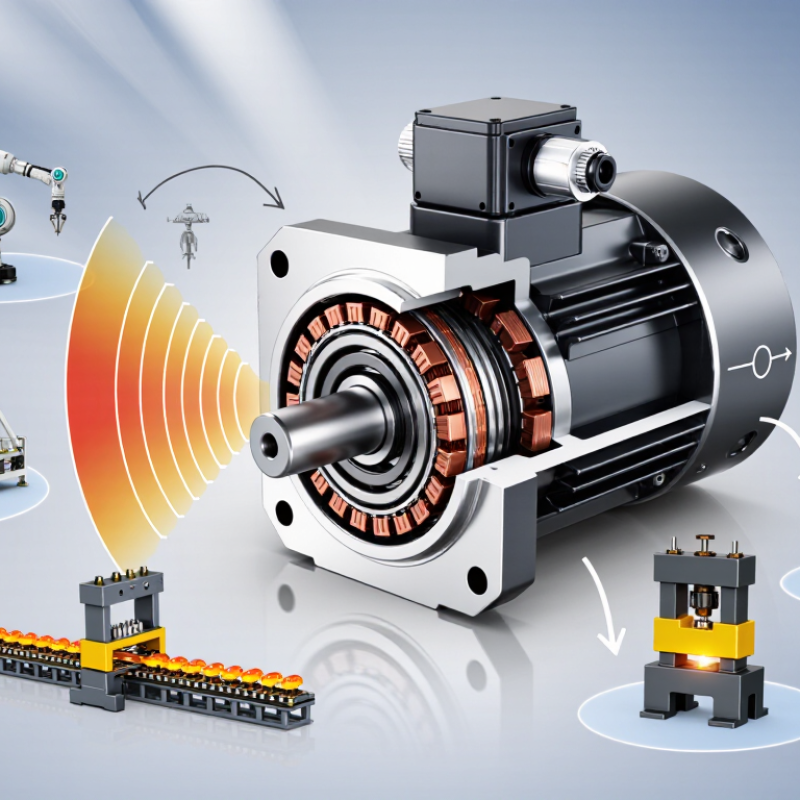
2026 Best Ultra High Temperature Servo Motor Suppliers

What Defines an Ultra High Temperature Servo Motor Supplier

What Defines an Ultra High Temperature Servo Motor Supplier

An ultra high temperature servo motor supplier must define “high temperature” with numbers, not marketing language. The rating should state ambient temperature, winding temperature, duty cycle, speed, and permitted torque. In practice, temperatures above 150°C can affect insulation, bearings, lubricants, cables, and feedback devices differently. One strong housing is not enough.

The International Energy Agency reports that electric motor systems consume about 46% of global electricity. This makes efficiency, thermal stability, and service life important purchasing factors. A qualified supplier should provide IEC 60034 test data, insulation-class details, torque derating curves, and thermal-cycle results. It should also explain how the motor performs after repeated heating and cooling. Real evidence matters.

Field experience reveals another test. Ask for bearing-life calculations, encoder temperature limits, grease specifications, and calibrated measurement records. A supplier should trace each motor’s materials and final inspection results. Certification helps, but it is not proof by itself. Temperature claims are often incomplete. I would question any supplier that gives one maximum figure without operating conditions. The U.S. Department of Energy’s Motor Systems Market Assessment also emphasizes system-level efficiency, not motor efficiency alone. Therefore, credible suppliers evaluate the motor, drive, load, cooling method, and installation environment together. Some published data may still reflect laboratory conditions, so independent validation remains worthwhile.

Key Technologies Behind High-Temperature Servo Motor Performance

High-temperature servo motor performance depends on materials, control, and disciplined thermal design. In 2026, leading suppliers should disclose winding insulation ratings, magnet limits, bearing specifications, and test conditions. Standard laboratory claims are not enough.

Copper windings need high-temperature insulation systems to resist partial discharge and accelerated aging. Ceramic or hybrid bearings can reduce lubricant breakdown near extreme heat. Permanent magnets also require careful selection, because heat can reduce magnetic strength and torque stability. Liquid cooling improves heat removal, but it adds pumps, seals, and maintenance points. Forced-air cooling is simpler, yet less effective in sealed machinery. Sensors placed near the winding and bearing offer faster protection. Advanced drives can reduce current peaks and regenerative heating.

The International Energy Agency reported in Energy Efficiency 2023 that electric motor systems consume roughly half of global electricity. The U.S. Department of Energy also identifies motor systems as a major share of industrial electricity use. These figures make efficiency more than a marketing issue. However, test data remains inconsistent across suppliers. That weakness deserves attention.

Tips: Request temperature-rise curves, continuous torque data, insulation-life testing, and encoder accuracy at operating temperature. Check performance after thermal cycling, not only during a short factory test. A motor rated for 200°C may still fail early if the gearbox, cable, or feedback device cannot tolerate the same environment. Select the complete motion system, not only the motor.

2026 Best Ultra High Temperature Servo Motor Suppliers - Key Technologies Behind High-Temperature Servo Motor Performance
Performance Dimension Common Industrial Practice Ultra-High-Temperature Design Approach Why It Matters
Ambient Temperature Rating Approximately 0°C to +40°C for many general-purpose servo systems. Specialized designs may support continuous operation above +100°C, with the exact limit defined by the motor construction, duty cycle, and drive electronics. Temperature rating determines whether the motor can operate reliably near furnaces, turbines, test chambers, and other heat-intensive equipment.
Winding Insulation Insulation systems are selected according to the motor's rated temperature class and voltage stress. High-temperature enamel wire, high-temperature slot liners, reinforced phase insulation, and vacuum-pressure impregnation are used to reduce thermal and electrical degradation. Insulation quality directly affects dielectric strength, winding life, partial-discharge resistance, and long-term torque stability.
Magnet Technology Permanent-magnet servo motors commonly use rare-earth magnets selected for the required torque density and speed. High-temperature magnet grades, protective coatings, and temperature-aware magnetic circuit design help reduce irreversible demagnetization risk. Magnet temperature limits can be lower than the external housing temperature and must be considered during overloads and rapid acceleration.
Bearing System Standard grease-lubricated bearings are suitable only within their specified temperature and speed ranges. High-temperature grease, heat-resistant seals, ceramic or hybrid bearing options, and remote lubrication arrangements may be used where appropriate. Bearings influence friction, vibration, noise, service interval, and the maximum permissible operating speed.
Cooling Method Natural convection or fan-assisted cooling is common in standard servo motors. Extended-surface housings, forced-air cooling, liquid jackets, thermal barriers, and separated cooling paths can be applied to control winding and bearing temperatures. Effective heat removal preserves torque output and prevents thermal aging of insulation, magnets, lubricants, and feedback components.
Feedback Device Encoders and resolvers are selected according to accuracy, speed, environmental conditions, and controller compatibility. High-temperature resolvers, remote-mounted feedback devices, heat-shielded encoders, and high-temperature cabling are used when conventional electronics cannot tolerate the environment. Feedback temperature capability is essential because the sensor may fail before the motor's electromagnetic components reach their maximum temperature.
Cable and Connector System Standard servo cables and connectors are generally designed for controlled industrial environments. Fiberglass, PTFE, FEP, silicone, or other application-specific insulation systems may be selected, together with high-temperature shielding and connectors. Cable insulation, shielding, bend radius, and connector sealing affect signal integrity, insulation resistance, and maintenance life.
Thermal Monitoring Resistance temperature detectors or thermistors are commonly embedded in motor windings. Multiple temperature sensors may monitor windings, bearings, housing, and feedback areas, with alarm and shutdown thresholds configured in the drive system. Accurate monitoring helps prevent overheating and allows thermal models to be validated under real operating conditions.
Torque Derating Rated torque is normally specified at a defined ambient temperature, duty cycle, and cooling condition. Performance data should include continuous and peak torque derating curves at elevated ambient temperatures and different speeds. Derating data provides a realistic basis for sizing and prevents the motor from being selected only from a nominal torque value.
Ingress and Environmental Protection Industrial motors are often specified with an enclosure protection level suitable for dust, moisture, and washdown requirements. High-temperature seals, corrosion-resistant finishes, protected cable entries, and application-specific enclosure designs are combined with the required IP rating. Protection against contaminants is necessary because dust, moisture, and process chemicals can accelerate insulation, bearing, and connector failure.
Thermal Expansion Control Standard motor structures are designed for normal industrial temperature changes. Rotor-stator clearances, bearing fits, shaft materials, housing geometry, and mounting interfaces are evaluated for differential thermal expansion. Controlled expansion helps maintain air-gap uniformity, alignment, bearing preload, and low vibration at elevated temperature.
Drive Compatibility Servo motors are matched with drives based on voltage, current, feedback protocol, and tuning requirements. The drive system should support temperature-based current limiting, motor thermal models, feedback protection, and the selected resolver or encoder interface. Motor performance depends on the complete motor-drive-feedback system rather than on the motor alone.
Validation and Testing Routine tests commonly include winding resistance, insulation resistance, no-load operation, vibration, and basic performance verification. High-temperature qualification may include thermal cycling, hot-soak operation, overload testing, insulation verification, bearing evaluation, and feedback validation. Qualification evidence helps distinguish a genuinely high-temperature design from a standard motor used beyond its published limits.
Supplier Selection Criteria Basic selection often focuses on rated power, speed, torque, dimensions, and delivery capability. Evaluate temperature derating curves, material specifications, test reports, customization capability, repair support, documentation quality, and system-level integration experience. A supplier's engineering and validation capability is critical when the application involves continuous heat, thermal cycling, limited cooling, or safety-related motion.
Technical note: Actual temperature limits, torque ratings, duty cycles, enclosure ratings, feedback compatibility, and cooling requirements must be confirmed from the applicable motor and drive datasheets. The permissible temperature of the complete servo system is governed by its lowest-rated component.

How to Evaluate Servo Motor Suppliers for Extreme Environments

2026 Best Ultra High Temperature Servo Motor Suppliers

How to Evaluate Servo Motor Suppliers for Extreme Environments

Selecting a servo motor supplier for extreme heat requires more than reading a temperature rating. Ask for torque curves at your actual operating temperature, not room temperature. A credible supplier should provide thermal test methods, insulation data, bearing limits, and feedback performance. Request samples from the same production process. Test them in a thermal chamber while measuring torque, vibration, current, and position error.

Look closely at materials and assembly details. High-temperature windings need suitable insulation, while seals, lubricants, connectors, and cable jackets may fail earlier. Check whether the supplier offers heat-resistant grease and sealed feedback devices. Review quality certificates, calibration records, failure reports, and component traceability. A reliable engineering team should explain derating clearly. Vague promises are a warning sign.

No evaluation is perfect. I have seen motors pass a short heat test but drift after repeated thermal cycles. That weakness changed our supplier checklist. Include rapid temperature changes, continuous load, power interruptions, and realistic mounting conditions. Ask how field failures are investigated and how design changes are documented. An on-site audit can reveal testing gaps that brochures hide. Small details matter, especially connector torque and cable routing. Suppliers should support prototype testing, service training, and spare-part planning throughout the motor’s expected life.

Leading Supplier Capabilities and Product Selection Criteria

Selecting a reliable ultra high temperature servo motor supplier requires more than checking a published temperature limit. Experienced suppliers should explain how windings, insulation, magnets, bearings, seals, and feedback devices perform under sustained heat. Ask for test data, not broad marketing claims. Ask for evidence.

A capable supplier can provide thermal cycling reports, torque curves, efficiency data, and failure analysis from comparable applications. Their engineers should discuss installation clearances, cooling conditions, cable materials, and overload periods. Request samples when possible. Measure the risk.

Product selection should match the actual operating environment. A motor exposed to 180°C continuously may need different materials than one facing short 220°C peaks. Confirm rated torque, speed, duty cycle, rotor inertia, encoder accuracy, and allowable vibration. Supplier support also matters. Look for documented quality controls, traceable components, realistic lead times, and responsive technical service. Customization can be valuable, but unclear changes often create delays and testing gaps. A lower quotation may exclude thermal validation or specialized connectors. That is where buyers can misjudge value. No supplier is perfect, and published specifications may not reflect field conditions. Compare independent test results with your machine’s heat profile before approving the final motor.

Applications, Certification, and Future Trends in 2026

In 2026, ultra high temperature servo motors are moving beyond laboratory demonstrations. They support furnace doors, semiconductor equipment, aerospace test rigs, and high-temperature packaging lines. In these areas, insulation, bearings, seals, and feedback devices must survive heat cycles without losing positioning accuracy. A motor rated for 180°C may still fail near a radiant furnace wall. Installation details matter.

The International Federation of Robotics reported 541,302 industrial robots installed worldwide in 2023. That volume increases demand for precise motion in hotter, smaller production cells. MarketsandMarkets also forecasts continued growth in the servo motors and drives sector through 2028, driven by factory automation and energy efficiency. Suppliers should provide thermal test curves, derating data, vibration results, and traceable batch records. Claims without test conditions are weak evidence.

Certification is becoming more practical and demanding. Buyers commonly review IEC 60034 requirements, IP protection under IEC 60529, electromagnetic compatibility, and quality systems aligned with ISO 9001. Hazardous-area installations may require additional regional certification. Future designs will combine embedded temperature sensing, silicon-carbide drives, and predictive maintenance software. Digital twins may reduce commissioning time, although their accuracy depends on honest field data. That remains an uncomfortable weakness. A supplier’s real experience is often visible in failure analysis, not brochures.

2026 Best Ultra High Temperature Servo Motor Suppliers: Applications, Certification, and Future Trends

The chart compares internationally recognized insulation thermal classes used in rotating electrical machines. The temperature values represent maximum permissible winding temperatures under the relevant thermal-class system, not ambient operating temperature.

Application relevance
Class 155–180 systems are commonly considered for demanding automation, semiconductor equipment, robotics, and high-duty-cycle machinery. Class 200–220 systems support applications exposed to more severe thermal stress when the complete motor design is qualified accordingly.
Certification focus
Supplier evaluations should review IEC 60034 requirements for rotating electrical machines, IEC 60085 thermal-class evaluation, insulation-system test evidence, temperature-rise tests, EMC documentation, and applicable functional-safety documentation.
2026 future trends
Key development directions include higher-temperature insulation systems, improved liquid and forced-air cooling, integrated temperature monitoring, predictive maintenance, compact high-torque designs, and stronger digital-drive integration.