
2026 Top MBBR Systems for Wastewater Treatment Buyers
For 2026 buyers, choosing a Mbbr System For Wastewater Treatment is less about selecting the largest tank and more about matching the process to the wastewater. Flow swings, incoming solids, temperature, and discharge targets all matter. A system that performs well in a supplier’s demonstration may behave differently at a crowded plant with limited operator time.
Professor Hallvard Ødegaard’s published MBBR research offers a useful design principle, paraphrased here: carrier movement, biofilm growth, and reactor conditions must work together for reliable treatment. That principle gives buyers a practical starting point. Ask how the media is retained, how air reaches the carriers, and what happens when screens clog. Small details matter. A blocked screen can disrupt operation.
This guide compares leading MBBR systems through buyer-focused criteria: treatment capacity, carrier design, aeration, controls, retrofit demands, and supplier support. Request operating references for wastewater similar to yours, not just polished performance charts. Check what the warranty excludes, too. That part is easy to overlook. No single system suits every site, and published figures may not reflect your actual flow or maintenance conditions. Use the shortlist to frame better questions, then verify performance assumptions with qualified engineers before purchase.
What MBBR Systems Are and Where They Fit in Wastewater Treatment
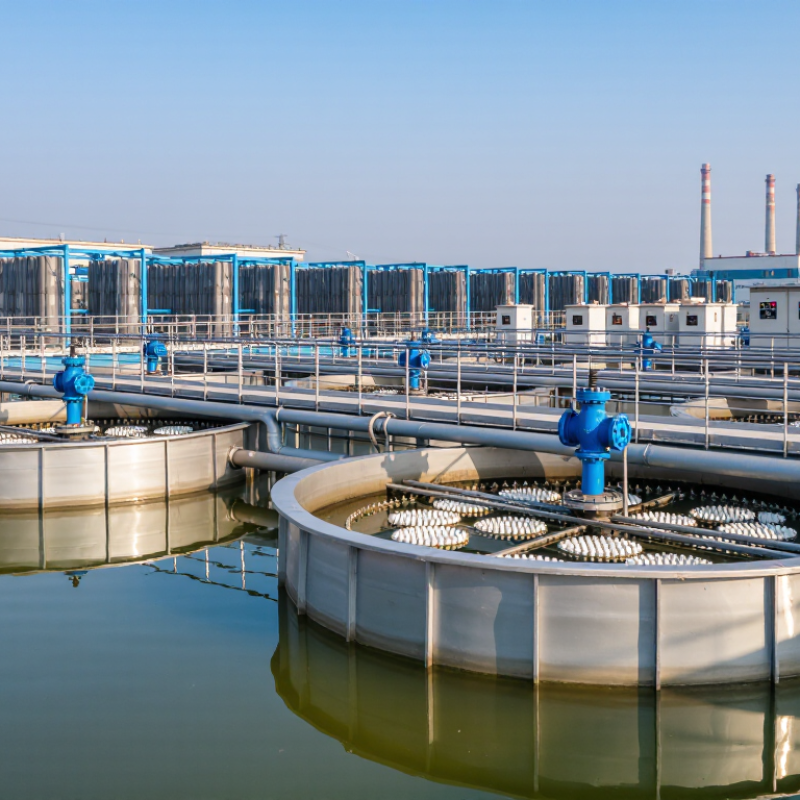
A moving bed biofilm reactor (MBBR) treats wastewater using small carriers that move through an aerated tank. Microorganisms grow on their surfaces and break down organic pollutants. The carriers look like compact plastic wheels, but their movement needs steady mixing and effective screening. Small details matter.
MBBR systems often fit plants that need more biological treatment capacity but have limited room for new tanks. They can also support upgrades where wastewater loads fluctuate. The U.S. EPA’s 2022 Clean Watersheds Needs Survey estimates $630 billion in wastewater infrastructure needs over 20 years, highlighting the scale of plant investment challenges. That figure does not mean MBBR suits every site.
MBBR is a biological treatment step, not a complete treatment solution. Plants still need appropriate solids separation, and often disinfection, after the reactor. Screens must keep carriers inside the tank; poor mixing or blocked screens can disrupt operation. The UN-Water 2024 wastewater progress report says 42% of household wastewater generated worldwide in 2022 was not safely treated. That gap is serious, but selecting a reactor requires local flow, pollutant, and maintenance data. A retrofit can look simple on paper. It may be less simple during seasonal peaks.
2026 Top MBBR Systems for Wastewater Treatment Buyers - What MBBR Systems Are and Where They Fit in Wastewater Treatment
| MBBR System Type | Typical Process Position | Primary Treatment Role | Common Applications | Key Buyer Considerations |
|---|---|---|---|---|
| Aerobic carbon-removal MBBR | Biological treatment after screening and primary treatment, or as a retrofit stage | Uses biofilm on moving carriers to reduce biodegradable organic matter, commonly measured as BOD or COD | Municipal wastewater, food and beverage wastewater, and other biodegradable industrial wastewater | Confirm influent load, temperature, oxygen-transfer capacity, carrier retention screens, and downstream solids separation requirements. |
| Nitrifying MBBR | Aerobic stage, often following carbon removal | Supports ammonia-oxidizing biofilm organisms that convert ammonia to nitrite and nitrate when conditions are suitable | Ammonia reduction, seasonal nitrification support, and treatment-plant capacity upgrades | Nitrification depends on temperature, dissolved oxygen, alkalinity, pH, and available biofilm surface area. Verify these factors using site-specific design data. |
| Anoxic denitrification MBBR | Anoxic stage, typically with nitrate-bearing recycle flow from an aerobic process | Promotes biological conversion of nitrate to nitrogen gas under low-oxygen conditions when a suitable carbon source is available | Total nitrogen reduction in municipal and industrial wastewater treatment | Check nitrate recycle, mixing, carbon availability, and oxygen carryover. External carbon may be needed if influent carbon is insufficient. |
| Multi-stage MBBR | Two or more tanks arranged in series, with conditions selected for each stage | Separates treatment objectives, such as carbon removal followed by nitrification or nitrogen removal | Facilities with variable loads, multiple effluent objectives, or limited space for process expansion | Review stage-specific loading, tank volume, aeration or mixing, interstage transfer, controls, and the consequences of peak-flow conditions. |
| Integrated fixed-film activated sludge (IFAS) | Carriers are added to an activated-sludge tank, combining suspended-growth biomass and attached biofilm | Increases biological treatment capacity within an existing activated-sludge process | Retrofits where additional treatment capacity is needed but tank expansion is constrained | Assess carrier retention, aeration, solids separation, return activated sludge operation, and compatibility with the existing tank and clarifier. |
| Compact or packaged MBBR plant | Pre-engineered treatment train that may include screening, MBBR tanks, and downstream clarification or filtration | Provides biological treatment in a modular arrangement; the actual treatment steps depend on the package design | Small communities, remote facilities, phased expansions, and sites requiring modular installation | Check the stated design flow and influent assumptions, applicable discharge limits, redundancy, power needs, sludge handling, and access for maintenance. |
| MBBR retrofit or polishing stage | Added before or after existing biological treatment, depending on the treatment objective | Provides added biofilm treatment capacity or an additional biological treatment step | Existing plants facing tighter limits, changing loads, or capacity constraints | Confirm hydraulic capacity, process compatibility, carrier screens, aeration or mixing upgrades, and the performance of downstream clarification or filtration. |
Selection note: MBBR (moving bed biofilm reactor) systems use freely moving carriers that provide surfaces for attached microbial growth. Carrier fill fraction, tank volume, media surface area, and expected treatment performance are project-specific design choices—not universal ratings. Final selection should be based on wastewater characterization, pilot or design data where appropriate, and applicable discharge requirements.