
How to Choose the Right Packing Covers for Global Shipping?

Choosing the right Packing Covers for global shipping requires more than selecting a strong fabric. The cover must suit the cargo, route, handling method, and storage environment. A pallet crossing humid ports may need water resistance, UV protection, and reinforced seams. A machine shipment may require breathable material to reduce condensation. Small choices can prevent expensive damage.

Packaging specialist Dr. Susan Selke offers a useful reminder: “Packaging must protect the product through every stage of distribution.” That principle applies directly to Packing Covers. A cover should fit tightly without pressing fragile surfaces. It should also allow forklifts, straps, labels, and inspection points to remain accessible. Poor sizing creates loose folds. Loose folds can catch during handling.

Material selection deserves careful attention. Woven polyethylene suits outdoor exposure and repeated use. Laminated covers can provide stronger moisture protection. However, thicker does not always mean better. Heavy material may increase shipping weight and complicate installation. This is where practical testing matters. Place the cover on a loaded pallet. Check the corners, seams, fasteners, and drainage points. Then examine it after vibration, rain, and temperature changes.

There is no universal cover for every trade lane. A supplier’s recommendation may sound convincing, yet real cargo conditions can prove different. That uncertainty deserves honest review. Buyers should request specifications, test samples, and clear performance data. They should also confirm cleaning, reuse, and disposal guidance. The best Packing Covers balance protection, handling efficiency, cost, and environmental responsibility without promising more than they can deliver.
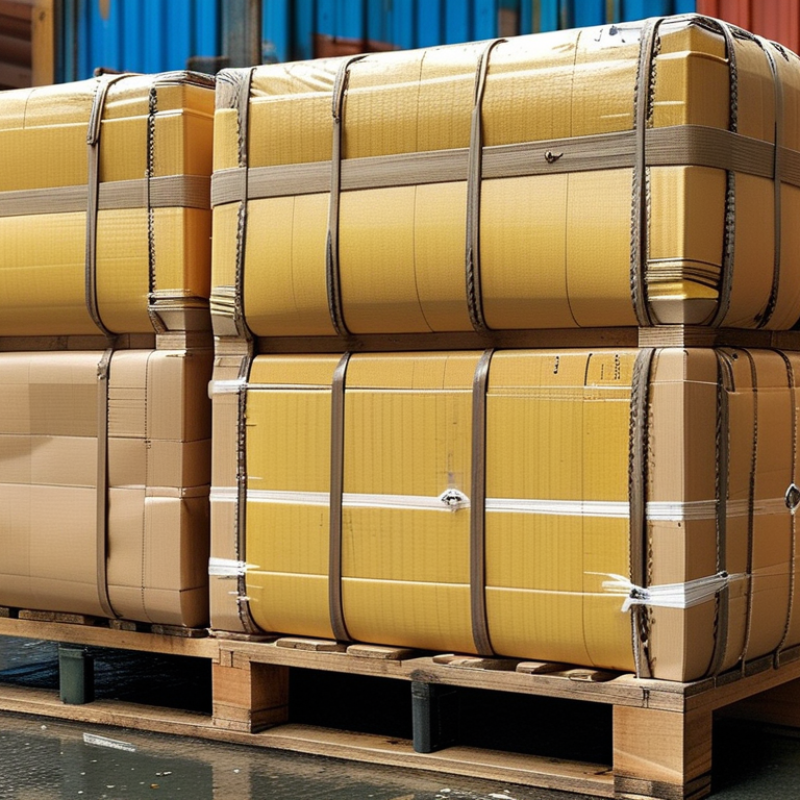
How to Choose the Right Packing Covers for Global Shipping?

Assess Route Exposure: Over 80% of Global Trade by Volume Moves by Sea

How to Choose the Right Packing Covers for Global Shipping?

More than 80% of global trade by volume moves by sea. That figure should shape every packing-cover decision. Sea freight can expose cargo to storms, salt spray, high humidity, and repeated handling. Containers may also sit on docks for days under intense sunlight. A cover that works for short inland transport may fail during a long ocean route.

Experienced cargo teams assess the full route before selecting materials. Choose covers with strong water resistance, UV stability, and tear protection. Breathable fabrics can reduce trapped condensation inside enclosed packaging. However, breathability alone is not enough during heavy rain or rough port handling. Fit matters too. Loose edges can catch wind, while tight covers may split around corners. In practical inspections, small gaps often become large damage points. That lesson is easy to overlook.

Tips: Match the cover to the cargo shape, transit time, and container position. Reinforce sharp corners before covering the load. Use secure straps, but avoid excessive tension. Check seams, eyelets, and closures before departure. Record photographs during packing and inspect the cover after arrival. This evidence supports better decisions on future routes. Some teams still choose the heaviest cover available, but heavier does not always mean safer. The best option balances protection, ventilation, handling, and realistic route exposure.

Define Cover Requirements Using ISO 780, ASTM D3951, and Cargo Hazards

How to Choose the Right Packing Covers for Global Shipping?

A packing cover should match the cargo, route, and handling risks. ISO 780 helps communicate handling instructions through clear symbols. It does not define one universal cover material. Use symbols for moisture protection, fragile handling, lifting points, and upright orientation. Then confirm that workers can see them after wrapping.

ASTM D3951 offers a practical framework for commercial packaging. It encourages protection against shipping stress, storage conditions, and repeated handling. Select covers that resist abrasion, puncture, dust, and water exposure. For metal parts, add vapor protection when condensation is likely. For oversized machinery, allow ventilation and secure the cover without blocking lifting access.

Tips: Check the full route, not only the warehouse. A coastal transfer may expose cargo to salt air. Long storage may create heat and trapped moisture. Test the fastening points before shipment. A strong sheet can still fail at its seams. This detail is often missed.

In field inspections, I look for loose edges, sharp corners, and unclear markings. Reinforce contact areas with padding or guards. Leave enough clearance for forklifts and slings. Avoid sealing wet cargo inside. That mistake is surprisingly common. Record the cover material, thickness, closures, and inspection results. Requirements may need adjustment after real shipments, because laboratory assumptions do not always match rough handling.

Select Materials for UV, Rain, Salt Spray, and 90%+ Container Humidity

Global shipping exposes packing covers to sunlight, rain, salt spray, and trapped moisture. UNCTAD’s Review of Maritime Transport 2023 reports that over 80% of global trade volume moves by sea. That scale makes small packaging failures expensive. Choose a cover as a barrier system, not as a simple sheet.

For strong UV exposure, specify UV-stabilized woven polyethylene or coated polyester. Ask for tested tensile retention, not only a “UV-resistant” claim. NOAA classifies a UV Index of 8 to 10 as very high. Dark covers may become extremely hot under direct sunlight. Use sealed seams and generous overlaps. Rain protection needs hydrostatic-head testing. Drain paths also prevent water pockets. Salt spray demands corrosion-resistant eyelets and thread. The fabric alone is not enough.

Humidity is harder. The German Insurance Association’s Container Handbook notes that container relative humidity can exceed 90%, encouraging condensation and mold. Use a water-resistant outer layer, but never seal wet cargo inside. Ventilated designs help during dry weather. They may fail during driving rain. Field inspections should check seams, grommets, and underside scuffing after long routes. One weak corner can ruin a strong cover. The uncomfortable question is often missed: was the cargo dry before covering?

How to Choose the Right Packing Covers for Global Shipping? - Select Materials for UV, Rain, Salt Spray, and 90%+ Container Humidity

Cover Material Typical Construction UV Resistance Rain & Splash Protection Salt-Spray Suitability Performance at 90%+ Container Humidity Typical Temperature Range* Reuse Potential Best-Fit Shipping Conditions
UV-Stabilized Woven Polyethylene High-density woven polyethylene with laminated or coated waterproof layers and UV stabilizers. Excellent
Suitable for extended outdoor exposure when the fabric is UV-stabilized.
Excellent
Water-resistant to waterproof, depending on seam construction and coating.
Good
Suitable for normal coastal transit; rinse salt residue after exposure when practical.
Excellent
Does not absorb significant water, but ventilation and dry cargo are still required.
Approximately -40°C to 80°C for common grades; confirm the supplier specification. High when cleaned, dried, folded, and stored away from sunlight. Long-distance ocean freight, outdoor staging, machinery, pallets, and oversized cargo.
PVC-Coated Polyester Woven polyester scrim coated on one or both sides with flexible PVC. Excellent
Strong resistance when formulated with UV stabilizers.
Excellent
Very low water permeability with welded or well-sealed seams.
Excellent
Good resistance to salt-laden air and repeated wetting.
Excellent
Low moisture uptake; inspect folds and seams for trapped condensation.
Approximately -30°C to 70°C for many commercial grades; flexibility may decline in cold conditions. Very high if the cover is not cut, abraded, or exposed to incompatible chemicals. Marine environments, repeated export shipments, heavy equipment, and harsh outdoor storage.
Polyurethane-Coated Nylon Lightweight woven nylon with a polyurethane coating on the cargo-facing or exterior side. Good
Use a UV-treated grade for prolonged sunlight; unprotected nylon can lose strength over time.
Excellent
Good waterproof performance when coated and seam-sealed.
Good
Suitable for routine salt exposure; clean deposits to reduce long-term degradation.
Good
Coating limits water penetration, but nylon fibers can absorb moisture if exposed or damaged.
Approximately -30°C to 70°C for common grades; verify coating limits for hot containers. High, provided abrasion and sharp edges are controlled. Lightweight covers, aircraft or vehicle components, and shipments where compact storage matters.
Laminated Woven Polypropylene Woven polypropylene fabric with a polyethylene or polypropylene film laminate. Good
Good only when UV stabilizers are included; unstabilized fabric is intended for shorter exposure.
Good
Effective against rain when the laminate and seams remain intact.
Good
Generally suitable for normal sea freight and temporary coastal storage.
Excellent
Low water absorption; prevent condensation from contacting moisture-sensitive cargo.
Approximately -20°C to 80°C for many grades; stiffness can increase at low temperatures. Medium to high; inspect for pinholes, delamination, and seam damage before reuse. General containerized cargo, cartons, building materials, and cost-sensitive export protection.
Coated Woven Polyester Woven polyester substrate with acrylic, PU, or other weather-resistant coating. Excellent
Polyester offers good dimensional stability and performs well with UV-resistant coatings.
Good
Protection depends strongly on coating weight, seam design, and cover fit.
Good
Suitable for intermittent marine exposure; select a coating rated for salt environments.
Excellent
Low stretch and low moisture uptake help maintain coverage in humid containers.
Approximately -30°C to 80°C, depending on the coating chemistry. High; good dimensional stability supports repeated handling. Precision equipment, export crates, finished goods, and covers requiring low stretch.
Uncoated Woven Polypropylene Woven polypropylene fabric without a continuous waterproof film or coating. Limited
Requires UV stabilization and is still less durable than coated options during prolonged exposure.
Limited
Can shed light moisture but is not a reliable waterproof barrier.
Limited
Salt and wetting can pass through the open weave; use only as a dust or abrasion cover.
Good
Low fiber water absorption, but the open weave does not block humid air or condensation.
Approximately -20°C to 80°C for common grades. Medium; easy to clean, but prone to fraying and UV-related strength loss. Indoor storage, short transfers, dust control, and secondary protection under a waterproof cover.
Breathable Nonwoven Polypropylene with Water-Resistant Finish Spunbond or multilayer nonwoven polypropylene with a breathable, water-repellent treatment. Good
Appropriate for moderate exposure when UV-stabilized; not ideal for months of direct sun.
Good
Repels light rain but is generally less waterproof than coated woven fabrics.
Limited
Use as an inner dust or condensation-control layer rather than the sole marine barrier.
Excellent
Breathability can help reduce trapped condensation when airflow is possible.
Approximately -20°C to 80°C, depending on finish and laminate structure. Low to medium; designed primarily for temporary or single-trip protection. Moisture-sensitive cargo requiring airflow, short-term storage, and use beneath an outer waterproof cover.
*Temperature ranges are indicative values for common commercial constructions, not universal limits. Confirm the exact fabric, coating, seam, and fire-performance specification before shipment.

Selection rule: For ocean containers exposed to direct sunlight, rain, salt spray, and humidity above 90%, prioritize a UV-stabilized coated woven material, sealed or welded seams, abrasion reinforcement, and a fit that prevents water pooling. A cover reduces external water exposure but does not replace desiccants, cargo ventilation planning, or moisture-barrier packaging for hygroscopic goods.

Match Cover Dimensions to ISO 668 Container Sizes and Load Geometry

How to Choose the Right Packing Covers for Global Shipping?

A packing cover must match the container and the cargo geometry. ISO 668 defines standard external lengths of 20 and 40 feet. A standard container is about 2.35 metres wide and 2.59 metres high externally. High-cube units reach approximately 2.90 metres in height. Internal clearances are smaller, so measuring only the container exterior can create costly errors.

UNCTAD’s Review of Maritime Transport 2024 reports that maritime trade reached about 12.3 billion tonnes in 2023. That volume exposes covers to rain, salt air, vibration, and repeated handling. Measure the packed load at its widest, highest, and longest points. Then allow space for folds, lifting equipment, lashing, and airflow. Do not stretch the cover tightly over sharp corners. Use reinforced protection where pallets, coils, or machinery create concentrated pressure.

Geometry matters more than nominal size. A 40-foot cover may still fail over a low, wide load with protruding supports. Check door clearance and the container’s internal length before cutting or ordering. Leave a controlled overlap near the base. Secure it without blocking drainage paths or inspection labels.

Small details matter.

The imperfect part is field measurement. Loads change after wrapping, pallet replacement, or late bracing. Recheck the final profile. A simple dimension sketch, including centre-of-gravity and tie-down points, can prevent a cover from tearing during crane movement. ISO 668 gives the container framework; the cargo profile determines the practical cover dimensions.

Verify Strength, Reusability, and Compliance Through ASTM Packaging Tests

Choosing packing covers for global shipping begins with evidence, not appearance. In practical packing work, I inspect seams, edge binding, closures, and fabric recovery after handling. A cover may look heavy yet fail at one stitched corner. ASTM packaging tests turn these observations into measurable decisions. Test tensile strength, tear resistance, and puncture resistance on representative samples. Use the actual fabric, thread, coating, and seam construction.

Reusability needs more than one successful shipment. Run repeated folding, abrasion, cleaning, and UV exposure where relevant. Then repeat strength and water-resistance checks. Drop, compression, and vibration testing can reveal damage caused by pallets, conveyors, and rough transfers. Keep test conditions, sample ages, and failures recorded. Small details matter. A weakened buckle can expose the load before anyone notices. Testing only new covers is a weak shortcut, although it saves time.

Compliance also requires traceable records and the correct ASTM method for the intended package and route. ASTM results do not automatically prove compliance with every destination rule. Confirm applicable shipping, material, labeling, and environmental requirements with qualified specialists. Request reports identifying laboratories, conditioning, dimensions, and acceptance criteria. Compare results with a realistic safety margin, not merely a pass mark. A cover that passes once may still be impractical. Recheck performance after redesigns, supplier changes, or repeated use.

How to Choose the Right Packing Covers for Global Shipping?

Recommended evaluation weights for verifying strength, reusability, and compliance through ASTM packaging tests

Use ASTM D4169 as the overall distribution-performance framework, supported by ASTM D5276 for drop resistance, ASTM D4728 for random vibration, ASTM D4577 for compression resistance, and ASTM D4332 for conditioning. The percentages represent a practical screening model; final acceptance limits should be defined from the product, route, load, and packaging specification.