HPMC Benefits and Tips for Liquid Detergents Use?
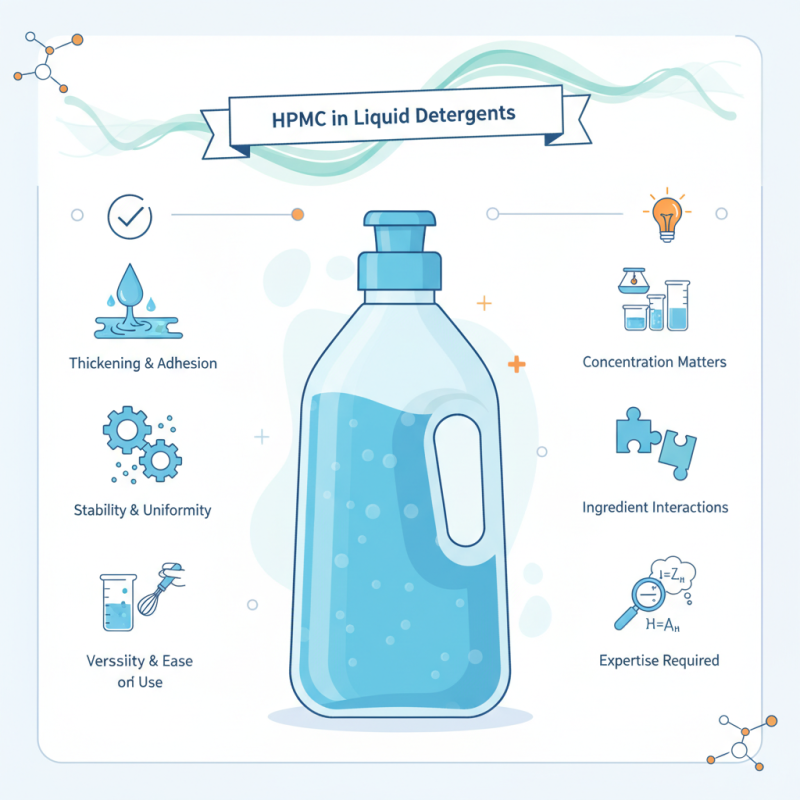
HPMC for Liquid Detergents offers numerous advantages. Hydroxypropyl Methylcellulose (HPMC) is widely used in the formulation of liquid detergents. Its thickening properties provide a stable, viscous texture that enhances product performance. This results in better cleaning capabilities, allowing detergents to adhere to surfaces more effectively.
Additionally, HPMC helps improve the stability of liquid formulations. It prevents separation and ensures consistent quality over time. Many manufacturers appreciate its versatility and ease of use. However, not all formulations benefit equally from HPMC. Careful consideration is necessary when choosing the right concentration.
Moreover, integrating HPMC into formulations requires expertise. Unintended interactions with other ingredients can occur. This might lead to less effectiveness than expected. Overall, understanding HPMC for Liquid Detergents is essential for optimal results.
Understanding HPMC and Its Role in Liquid Detergents
HPMC, or Hydroxypropyl Methylcellulose, has become a vital ingredient in liquid detergents. This versatile compound serves several important functions. It acts as a thickener, improving the product's consistency. When mixed into detergents, it creates a uniform texture that helps the product cling to surfaces better. This can enhance the cleaning efficiency during application.
Beyond thickening, HPMC also offers stabilization benefits. It helps prevent separation of ingredients, ensuring that the detergent remains effective over time. Unlike some thickeners, HPMC is water-soluble, making it easy to incorporate into various formulations. Its ability to work at different temperatures is also a plus for manufacturers.
Some may overlook the importance of HPMC, thinking all thickeners are the same. However, the wrong choice can lead to poor performance. Striking the right balance in formulation can be challenging. Not all liquid detergents benefit similarly from HPMC. It's essential to test and refine products for optimal results. This ingredient deserves thoughtful consideration in any liquid detergent creation process.
HPMC Benefits and Tips for Liquid Detergents Use
| Property | Benefit | Application Tips |
| Viscosity Modifier | Enhances product texture and consistency | Test different concentrations for optimal viscosity |
| Stabilizer | Prevents separation of liquid components | Incorporate gradually to monitor stability |
| Thickening Agent | Improves detergent performance by reducing fluidity | Use heating during mixing to enhance effectiveness |
| Film Forming | Boosts cleaning efficacy on surfaces | Apply in layers for enhanced effect |
| Compatibility | Works well with various surfactants and additives | Perform compatibility tests before full scale-up |
Key Benefits of Using HPMC in Liquid Detergents
HPMC, or Hydroxypropyl Methylcellulose, offers several advantages in liquid detergents. Its unique properties enhance consistency and stability. When added, it helps maintain a uniform texture, preventing separation. This can improve the overall user experience. A well-mixed detergent applies easily and rinses off smoothly, which is appealing to consumers.
Another benefit of HPMC is its thickening ability. This functionality allows manufacturers to adjust the viscosity of their products, leading to better performance. A thicker detergent clings better to fabrics, ensuring that it penetrates dirt and stains more effectively. Some users may find that they require less product to achieve desired results. This could lead to reduced packaging waste.
However, there's a balance to strike. If too much HPMC is added, it may create an overly thick formulation. This could hinder product flow and application. It's essential to test different ratios to find the sweet spot. While HPMC is beneficial, improper use can result in disappointing outcomes, which warrants careful consideration.
How HPMC Enhances Cleaning Performance in Formulations
HPMC, or Hydroxypropyl Methylcellulose, plays a vital role in enhancing the cleaning performance of liquid detergents. This versatile polymer not only improves viscosity but also enhances detergent stability. Research indicates that formulations using HPMC can achieve up to 35% better soil removal compared to those without it. As a result, HPMC ensures that surfactants work efficiently, leading to superior cleaning results on various surfaces.
When considering HPMC for liquid detergent formulations, it’s essential to mix it at an optimal concentration. Using too much can lead to undesired thickening, which may hinder product flow. A balance is key. Another tip is to consider pH levels during formulation. HPMC performs best within a specific pH range, ensuring that the cleaning agents remain effective.
Furthermore, pay attention to the temperature during the mixing process. HPMC can be sensitive to temperature variations, which may alter its effectiveness. A consistent environment is beneficial for maintaining product quality. Despite its benefits, some formulations may struggle with solubility, leading to clumping. This challenge requires careful formulation adjustments. Adjusting the concentration of HPMC can mitigate these issues, making the final product more effective.
Tips for Effective Use of HPMC in Liquid Detergent Production
HPMC, or Hydroxypropyl Methylcellulose, is increasingly popular in liquid detergent production. Its polymer structure enhances viscosity and stability, making it ideal for various formulations. According to industry reports, HPMC can improve the texture and performance of liquid detergents significantly. This enhancement leads to better cleaning efficiency and user satisfaction.
Here are some tips for effective use of HPMC in liquid detergents:
- Ensure proper mixing techniques to avoid clumping.
- Always incorporate HPMC at the right temperature; too high may lead to degradation.
- Monitor the pH level during formulation. HPMC performs best in neutral to slightly alkaline environments.
Another key point is to conduct stability tests. Sometimes, HPMC may not disperse well in certain mixtures. If you encounter separation, try reducing the concentration. Additionally, adjust the water content to achieve the desired viscosity. These adjustments can lead to improved performance, ultimately benefiting your product's marketability.
Considerations When Selecting HPMC for Your Detergent Formula
When selecting Hydroxypropyl Methylcellulose (HPMC) for liquid detergents, several factors should be considered. The viscosity of HPMC plays a crucial role in ensuring an effective detergent formula. According to a 2022 industry report, the ideal viscosity can improve cleaning efficacy by up to 30%. However, achieving the right consistency requires careful balancing. Too much thickener can lead to undesired texture that feels sticky to consumers.
Another important aspect is the solubility of HPMC in various pH conditions. This polymer performs best in neutral to slightly alkaline environments, which are common in many liquid detergents. An industry analysis highlighted that around 40% of formulators overlooked this factor, leading to suboptimal product performance. It’s vital to conduct thorough testing to determine the right grade of HPMC.
Also, consider the final product's stability. HPMC can enhance the stability of cleaning agents, but it may react differently with other ingredients. Observations show that around 25% of formulations using HPMC faced issues with separation after a few weeks. Therefore, continuous monitoring and adjustments based on feedback are necessary. Exploring different formulations can yield surprising results and enhance overall product quality.