
Top Sheet Extruder Manufacturers for Global Buyers?
Choosing a reliable Sheet Extruder manufacturer can shape product quality, production stability, and long-term operating costs. Global buyers often compare machine speed first. That can be a costly mistake. Melt uniformity, sheet thickness control, cooling design, and technical support deserve equal attention.
Tim A. Osswald, a recognized polymer processing professor, has stated, “Polymer processing is the transformation of polymers into useful products.” This principle remains practical on the factory floor. A capable supplier should understand the complete transformation, from resin drying to final winding. It should also explain how screw geometry handles recycled content, sensitive additives, or high-output production.
This guide reviews leading Sheet Extruder manufacturers serving international buyers. It considers extrusion capacity, die technology, automatic gauge control, energy use, factory testing, and after-sales service. It also examines details that brochures may hide. Examples include temperature recovery after start-up, roll-surface finish, spare-parts access, and response time during breakdowns.
Real purchasing decisions are rarely perfect. A premium machine may not suit every plant. A lower initial price may create higher maintenance costs later. Buyers should request sample sheets, performance data, installation references, and clear warranty terms. These steps reveal more than impressive showroom demonstrations.
The best manufacturer is not always the largest. It is the partner that matches materials, output targets, local skills, and future expansion plans. Yet supplier claims still require verification. Independent testing and direct customer conversations remain essential.
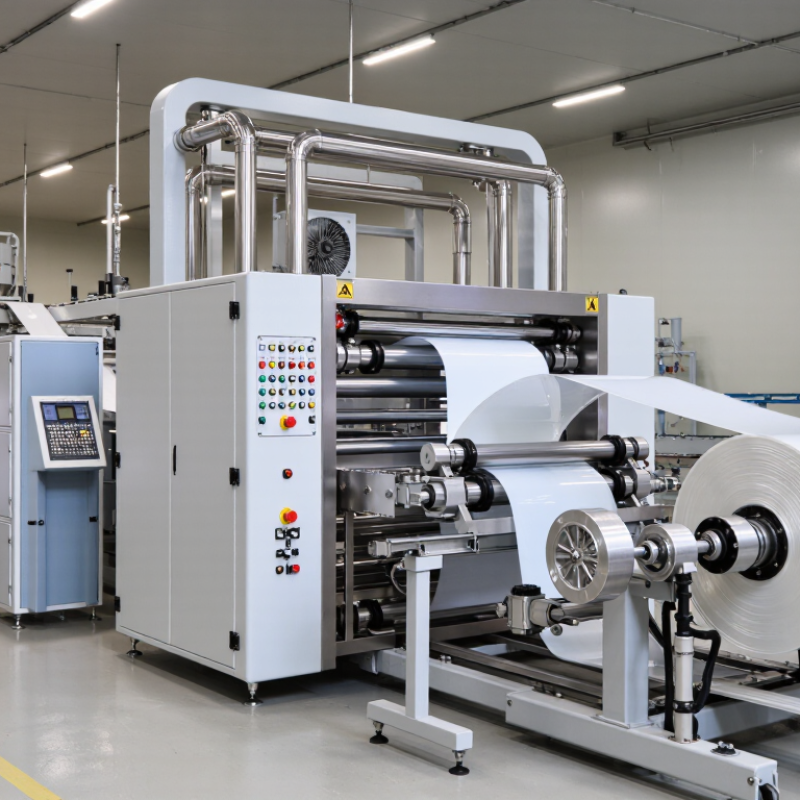
What Is a Sheet Extruder and How Does It Work?
What Is a Sheet Extruder and How Does It Work?
A sheet extruder converts plastic pellets into continuous, flat sheets with controlled thickness. The process begins in a hopper, where dry, clean material enters a heated barrel. A rotating screw moves the pellets forward while heat and friction melt them. Temperature must remain stable. Excessive heat can discolor the polymer or reduce its strength.
The molten plastic passes through a screen changer and a flat die. The die spreads the melt across the required sheet width. Adjustable die lips help control thickness, although they cannot correct every upstream problem. A polishing stack then cools and shapes the sheet between polished rollers. Small changes in roller temperature, pressure, or speed can create visible waviness, haze, or uneven edges.
Operators monitor melt pressure, motor load, cooling water, and sheet gauge during production. Inline thickness sensors provide useful feedback, but calibration still matters. A dirty die may leave lines across the surface. Moisture in the raw material can produce bubbles or silver streaks. In practical installations, stable feeding often matters as much as advanced controls.
Sheet extruders serve packaging, construction, automotive, medical, and industrial applications. The correct configuration depends on polymer type, sheet width, output rate, and tolerance requirements. A higher output machine is not automatically better. It may waste more material when setup conditions are poorly matched. Experienced buyers should review trial data, maintenance access, energy use, and operator training before selecting equipment.
| Data Dimension | Technical Item | Typical Reference Data | Buyer-Relevant Explanation |
|---|---|---|---|
| What a Sheet Extruder Is | |||
| Definition | Sheet extrusion line | A continuous system that melts thermoplastic resin and forms it into a flat sheet through a wide flat die. | The line normally includes material feeding, extrusion, flat-die forming, calendering, cooling, trimming, haul-off and stacking or winding. |
| Main forming method | Flat-die extrusion | The polymer melt exits a slot-shaped die and is distributed across the required sheet width. | Die design and melt distribution strongly influence thickness uniformity, edge quality and surface appearance. |
| Primary cooling method | Three-roll or multi-roll stack | Chilled rolls cool, polish and calibrate the extruded sheet. | Roll temperature, roll gap and roll surface condition affect gloss, flatness, thickness and shrinkage. |
| How the Extrusion Process Works | |||
| 1. Feeding | Hopper and gravimetric or volumetric feeder | Pellets, regrind, masterbatch or approved additives are supplied to the extruder. | Gravimetric feeding generally provides more consistent dosing than volumetric feeding when bulk density changes. |
| 2. Melting | Heated barrel and rotating screw | The screw conveys, compresses, mixes and melts the polymer through controlled heat and shear. | Stable melt temperature and pressure are essential for consistent sheet thickness and appearance. |
| 3. Filtration | Screen changer and breaker plate | The melt is filtered before entering the die to remove contamination and unmelted particles. | Automatic screen changing can reduce production interruptions in continuous operation. |
| 4. Die forming | Flat coat-hanger or T-die | The die spreads the melt across the sheet width and controls the initial melt thickness. | Automatic die-bolt adjustment or an automatic thickness-control system can improve cross-direction uniformity. |
| 5. Calibrating and cooling | Roll stack | The hot sheet passes through temperature-controlled rolls that cool and size it. | Roll alignment, gap control and cooling capacity are important for flatness and dimensional stability. |
| 6. Finishing | Edge trimming, haul-off and cutting | The sheet edges may be trimmed before the sheet is cut to length or wound. | Trim recycling can improve material utilization when the reclaimed material is compatible with the product specification. |
| Common Materials and Processing Considerations | |||
| Polypropylene (PP) | Rigid packaging, automotive and general-purpose sheet | Typical melt-processing range: approximately 190–240 °C, depending on grade and formulation. | Good chemical resistance and low density; cooling and shrinkage control are important for flat sheet. |
| Polystyrene (PS/HIPS) | Packaging, trays and refrigerator liners | Typical melt-processing range: approximately 180–240 °C, depending on grade and impact modification. | Provides good surface finish; temperature stability helps prevent brittleness and uneven gloss. |
| ABS | Technical panels, housings and thermoforming sheet | Typical melt-processing range: approximately 220–260 °C, depending on grade. | Often requires controlled drying because moisture can contribute to surface defects and reduced mechanical performance. |
| PET | Packaging and high-clarity sheet | Typical melt-processing range: approximately 260–290 °C, depending on grade and process design. | Moisture control is critical; properly dried resin helps limit hydrolytic degradation during processing. |
| PLA | Compostable packaging and display sheet | Typical melt-processing range: approximately 170–210 °C, depending on grade. | Requires careful residence-time and temperature control because excessive heat can reduce molecular weight. |
| Typical Equipment and Capacity Parameters | |||
| Sheet thickness | Finished sheet range | Common commercial ranges are approximately 0.2–25 mm; the practical range depends on the die, roll stack and polymer. | Thin sheet needs precise melt distribution and cooling; thick sheet needs sufficient cooling capacity and controlled shrinkage. |
| Working width | Useful sheet width | Many industrial lines are designed for approximately 300–3,000 mm working widths. | The selected width should account for edge trim, downstream equipment and the required finished product size. |
| Line speed | Haul-off speed | Typical sheet lines may operate from approximately 1–30 m/min, depending on thickness, material and output. | Higher speed requires stronger cooling, stable tension control and accurate thickness regulation. |
| Extruder screw diameter | Single-screw extruder size | Industrial sheet extruders commonly use screw diameters in the approximate range of 45–200 mm. | Larger screws generally support higher output, but the correct size depends on polymer, throughput and residence-time limits. |
| Screw length-to-diameter ratio | L/D ratio | Typical thermoplastic sheet-extrusion screws use approximately 24:1–36:1 L/D. | A longer screw can provide more melting and mixing length, but excessive residence time may damage heat-sensitive materials. |
| Production output | Material throughput | Commercial systems may range from approximately 50 to more than 1,000 kg/h, depending on configuration and material. | Output should be evaluated together with sheet width, thickness, line speed and required surface quality. |
| Key Criteria for Evaluating Manufacturers | |||
| Material compatibility | Supported polymers and additives | Confirm compatibility with virgin resin, regrind, fillers, flame retardants, color concentrates and biodegradable materials. | The screw, barrel, die and filtration system should match the material's processing temperature and sensitivity. |
| Thickness control | Automatic gauge regulation | Common systems use die-bolt adjustment, automatic thickness measurement or closed-loop control. | Closed-loop control can reduce cross-direction thickness variation when correctly calibrated and maintained. |
| Energy efficiency | Drive and heating system | Important elements include efficient motor drives, insulated barrels, zoned heating and optimized cooling circuits. | Energy consumption should be compared in relation to actual output, such as kWh per kilogram. |
| Quality assurance | Process monitoring and testing | Useful measurements include melt pressure, melt temperature, sheet thickness, width, basis weight and surface appearance. | Documented inspection procedures support repeatable production and easier acceptance testing. |
| After-sales support | Installation, training and spare parts | Evaluate commissioning support, operator training, remote diagnostics, service response and availability of wear parts. | Local technical support and a clear spare-parts list can reduce downtime for global buyers. |
| Safety and compliance | Machine guarding and electrical conformity | Review emergency stops, interlocked guards, hot-surface protection, electrical documentation and applicable destination-market requirements. | Compliance documentation should be confirmed before ordering, especially for international installation. |