Best Plastic Injection Mold Making Company in China
Choosing the best plastic injection mold making company in China starts with a practical question: can the supplier turn a part drawing into a stable, repeatable production process? Mold quality affects more than appearance. It influences cycle time, dimensional consistency, cooling, and maintenance needs. A polished sample is useful, but it cannot reveal every issue. Ask for material details, mold-flow findings, steel specifications, and a clear trial plan.
The market context is substantial. Grand View Research estimated the global injection molded plastics market at USD 330.48 billion in 2023 and forecast a 4.6% compound annual growth rate from 2024 to 2030. This measures molded products, not mold-making revenue, so it signals demand rather than a supplier’s performance. That distinction matters. For technical perspective, mold-design expert John Beaumont’s published work on runner and gating design supports a useful principle: runners, gates, and cavities must be planned as one flow system. This is a paraphrased takeaway, not a direct quotation. Buyers should still test the idea against their own part geometry and resin.
Look closely at the details. A thin rib, a deep boss, or a visible weld line can change tooling decisions. Strong suppliers explain those trade-offs with evidence, not promises. Request comparable project examples, inspection records, and a realistic timeline. Then check who owns revisions and how spare inserts will be handled. No supplier is perfect. A careful comparison should expose gaps, including your own unclear specifications, before steel is cut.
What a Plastic Injection Mold Making Company in China Does
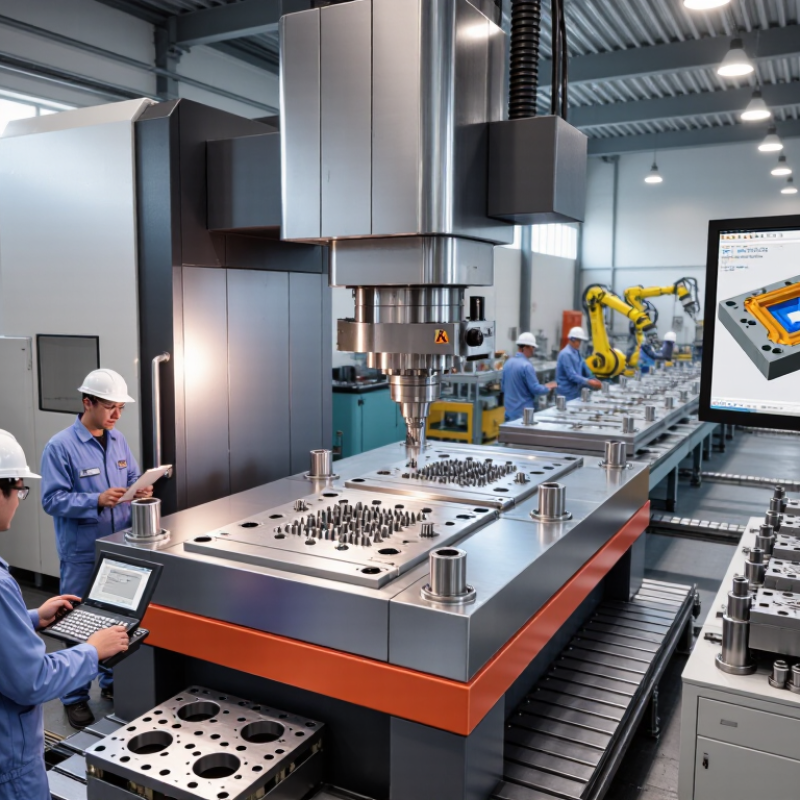
A plastic injection mold making company in China turns a part design into a working production tool. The work often begins with a drawing review, not a cutting machine. Engineers check wall thickness, draft angles, parting lines, and likely gate locations. They may recommend changes if a deep rib or sharp corner could cause trouble during molding. Details matter. A small adjustment can reduce sink marks or make the part easier to release. The advice should be specific, with reasons the product team can assess.
Once the design is agreed, the team machines mold components, fits the core and cavity, and checks cooling channels and moving parts. CNC machining and electrical discharge machining may both be used, depending on the geometry. Then comes a mold trial. Technicians record settings such as melt temperature, injection pressure, and cycle time, while inspecting sample parts for flash, warping, and dimensions. If a sample misses a tolerance, the cause may be the mold, the material, or the process. That judgment is not always obvious, and even experienced teams may need another test. Clear measurement records and careful revision notes help keep decisions traceable.
Best Plastic Injection Mold Making Company in China - What a Plastic Injection Mold Making Company in China Does
| Work area | What the mold maker does | Typical outputs or options | What to verify |
|---|---|---|---|
| Part review and DFM | Reviews the part design for moldability, including draft, wall thickness, ribs, undercuts, and likely filling or ejection issues. | Design-for-manufacturing feedback, proposed part changes, and a preliminary tooling approach. | Confirm that design changes are documented and approved before tooling begins. |
| Mold design | Plans the cavity and core, parting line, gates, runners, cooling channels, vents, and ejection system around the part and resin requirements. | 3D mold assembly, 2D drawings, and, where specified, mold-flow analysis. | Review the proposed gate location, cooling strategy, and maintenance access. |
| Tool steel and components | Selects mold materials and standard components based on production volume, resin, surface finish, and operating conditions. | Common choices can include pre-hardened P20 or 718H and corrosion-resistant or polishable grades such as S136; selection depends on the application. | Request material specifications and heat-treatment details where applicable. |
| Mold configuration | Determines the number of cavities and whether the tool uses a cold runner, hot runner, or other suitable layout. | Single-cavity or multi-cavity molds; runner configuration is chosen to suit the part, machine, and production needs. | Compare initial tooling cost, expected output, material waste, and process complexity. |
| Machining and assembly | Manufactures mold components using processes such as CNC machining, EDM, grinding, and polishing, then assembles and fits the tool. | Finished mold components, assembled tooling, and specified surface textures or finishes. | Check critical dimensions, steel identification, surface finish, and mold documentation. |
| Trial molding and tuning | Runs mold trials, inspects molded samples, adjusts the tool or process, and checks that the part can be ejected and produced consistently. | Trial samples, molding records, and a list of required corrections; trial stages are often identified as T0, T1, and subsequent revisions. | Agree on the resin, sample quantity, acceptance criteria, and who pays for shipping and revisions. |
| Inspection and validation | Measures molded parts against agreed drawings and checks appearance and functional requirements using appropriate inspection methods. | Dimensional inspection results and sample parts; reports may include measurements of specified critical features. | Define tolerances, measurement method, sampling plan, and cosmetic standards before production approval. |
| Production support and maintenance | Provides guidance on mold setup, cleaning, wear parts, repairs, and preventive maintenance; some suppliers also offer molding production. | Maintenance instructions, spare-parts recommendations, and repair or production support as agreed in the project scope. | Clarify warranty terms, spare-parts availability, response times, and mold ownership. |
| Note: Tooling choices, lead time, achievable tolerances, mold life, and total cost depend on part geometry, resin, surface requirements, production volume, and the agreed project scope. Request a project-specific quotation and validation plan. | |||
Related Posts
-
What Is Plastic Injection Molding and How Does It Work?
-
China Best Plastic Injection Molding Manufacturer?
-
Innovative Injection Molding Design Examples to Inspire Your Next Project
-

How to Choose the Right Injection Tooling for Your Manufacturing Needs
-
How to Master Injection Mold Making Techniques for Cost Effective Production
-
Why Is Plastic Injection Tooling Essential for Manufacturing?