
7 Tips for Buying Kojic Acid Dipalmitate Powder
Buying Kojic Acid Dipalmitate Powder begins with evidence, not a polished product page. A fine white powder in a sealed pouch may look reassuring, but appearance alone cannot confirm identity, purity, or consistency. Buyers should compare the product specification with a batch-specific certificate of analysis, then check the test methods and listed limits. Small details matter.
Cosmetic chemist Stephen Alain Ko is a relevant formulation professional, but I cannot verify a direct quotation from him about purchasing this ingredient. To avoid inventing a statement, here is an editorial buying principle instead: “Trust the batch record, not the sales promise.” Use it as a prompt to ask suppliers about ingredient identity, assay, impurities, manufacturing traceability, packaging, and storage conditions. Request a safety data sheet and technical documentation, too. A sample can help assess handling and compatibility, but it does not replace laboratory verification.
This guide’s seven tips will help readers compare suppliers and spot unanswered questions before placing an order. Look closely at batch consistency, document dates, and whether the seller explains testing clearly. Ask how the powder should be stored and handled, and confirm that its specifications suit the intended cosmetic formulation. No supplier document tells the whole story. Independent review may still be needed. A low price can be tempting, yet unclear specifications create uncertainty that a discount cannot fix. Buyers should keep records and review claims cautiously.
Understand the Intended Use and Required Grade
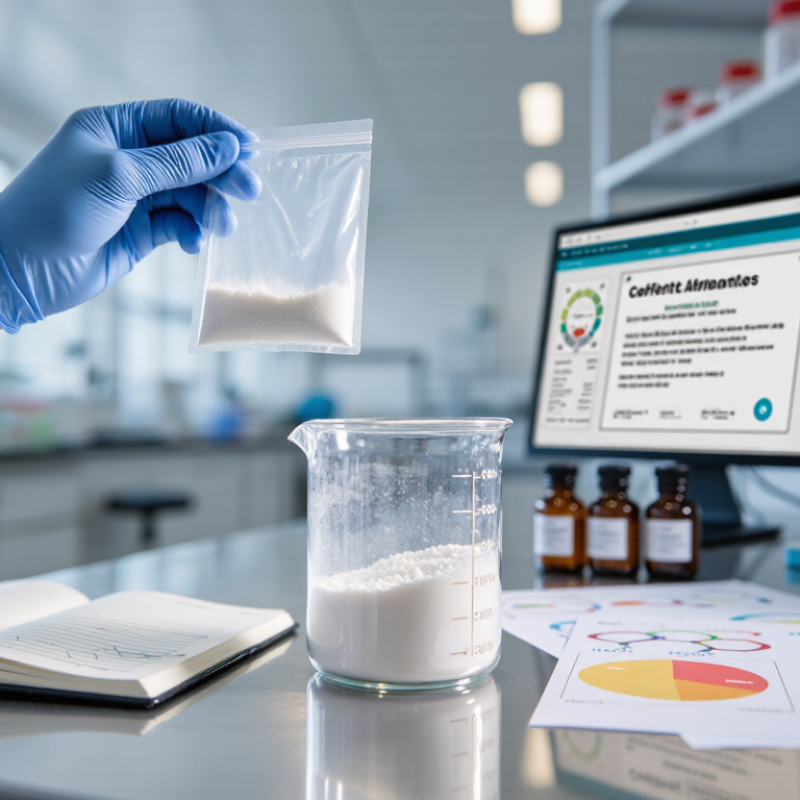
Before buying kojic acid dipalmitate powder, define where it will be used. A leave-on cream, an emulsified serum, and a laboratory trial may require different specifications. Cosmetic use calls for material documented for cosmetic formulation; a general technical grade may not provide the same detail. Check the product specification and certificate of analysis for identity, assay, appearance, and stated impurity limits. Small details matter. If the powder will be used in a finished product, confirm that its documentation fits your quality process rather than assuming every listed grade is interchangeable.
Ask how the powder behaves in the type of formula you plan to make. Particle size and dispersibility can affect mixing, texture, and the chance of visible specks. Request handling guidance and review the safety data sheet before opening the container. These checks do not guarantee a finished formula will perform as expected. Bench testing is still needed. I would also verify that the lot number on the packaging matches the paperwork, then keep a small sample for comparison. It is easy to focus on price and overlook this step; I have seen how a vague grade description can leave a formulator guessing later.
7 Tips for Buying Kojic Acid Dipalmitate Powder — Understand the Intended Use and Required Grade
| Tip | Intended Use | Grade and Documentation to Check | Practical Buying Check |
|---|---|---|---|
| 1. Define the product type first | Decide whether the powder is for a rinse-off product, a leave-on cosmetic, or laboratory formulation work. | Choose material expressly documented for the intended application. Cosmetic suitability and requirements can vary by market and finished-product use. | Tell the supplier the product format and destination market before requesting a specification or quote. |
| 2. Confirm the ingredient identity | Kojic acid dipalmitate is an oil-soluble kojic acid derivative used as a cosmetic ingredient. | Check the ingredient name, chemical identity, and any applicable identifier on the specification and certificate of analysis (COA). | Make sure the documents refer to kojic acid dipalmitate—not kojic acid or a blend containing other ingredients. |
| 3. Match the grade to your process | Powder handling and incorporation depend on the formulation and manufacturing process. | Review the supplier’s stated appearance, solubility or dispersibility information, and handling guidance. These details are product-specific. | Request a small evaluation sample and test it in the intended oil phase or finished formulation before purchasing larger quantities. |
| 4. Review the lot-specific COA | Batch quality matters for both formulation trials and routine production. | Ask for a COA tied to the offered lot, with the supplier’s specification limits, test results, and test methods where available. | Check that the lot number on the COA matches the lot offered and that the reported results meet the stated specification. |
| 5. Check safety and traceability documents | Safety review and supply-chain records support responsible ingredient handling and product assessment. | Request a current safety data sheet (SDS) and available origin, manufacturing, or traceability information. | Confirm that the SDS covers the supplied material and that your team can obtain any additional records required for its assessment. |
| 6. Verify regulatory suitability for the market | Ingredient rules and permitted uses may differ among jurisdictions and product categories. | Obtain relevant regulatory information from the supplier, then verify suitability against current local requirements for your finished product. | Do not treat “cosmetic grade” as a universal approval or as proof that every use is permitted in every market. |
| 7. Confirm storage, packaging, and ordering details | Appropriate handling helps preserve the material’s condition throughout storage and use. | Follow the supplier’s stated storage conditions, shelf life, packaging information, and handling instructions. | Before ordering, confirm pack size, shipping conditions, available lot documentation, and the recommended storage instructions. |
Note: Specifications and grade designations are supplier-specific. Use the current technical documents for the exact lot, and assess the finished formulation and applicable requirements independently.