Choosing a China Top Ferric Sulfate Wastewater Treatment Manufacturer requires more than comparing prices or catalog photographs. A dependable supplier should demonstrate process knowledge, consistent production, and transparent quality controls. Its ferric sulfate should arrive as a stable liquid or uniform solid, with clear iron content, acidity, density, and impurity specifications.
John Bratby, a recognized authority on coagulation and author of Coagulation and Flocculation in Water and Wastewater Treatment, states, “Jar testing is essential for selecting the correct coagulant and dosage.” This practical principle remains highly relevant. Ferric sulfate performance can change with raw-water temperature, alkalinity, phosphorus concentration, and mixing intensity. A serious manufacturer should support laboratory trials before recommending full-scale dosing.
Look beyond the sales claim.
An experienced supplier can provide batch records, certificates of analysis, safety documentation, production photos, and export references. It should explain how its product reduces turbidity, color, phosphorus, or suspended solids without hiding sludge-generation concerns. During a site evaluation, ask for a small sample and test it with your actual wastewater. Observe the floc: Is it dense, fast-settling, and easy to dewater? Does the treated water remain clear after several minutes?
No supplier is perfect. Even a well-managed factory may face seasonal raw-material variation or transport delays. That is why reliable communication, corrective-action procedures, and repeat testing matter. This introduction examines how Chinese manufacturers produce, verify, and support Ferric Sulfate Wastewater Treatment products, while identifying the evidence buyers should request before signing a supply agreement.
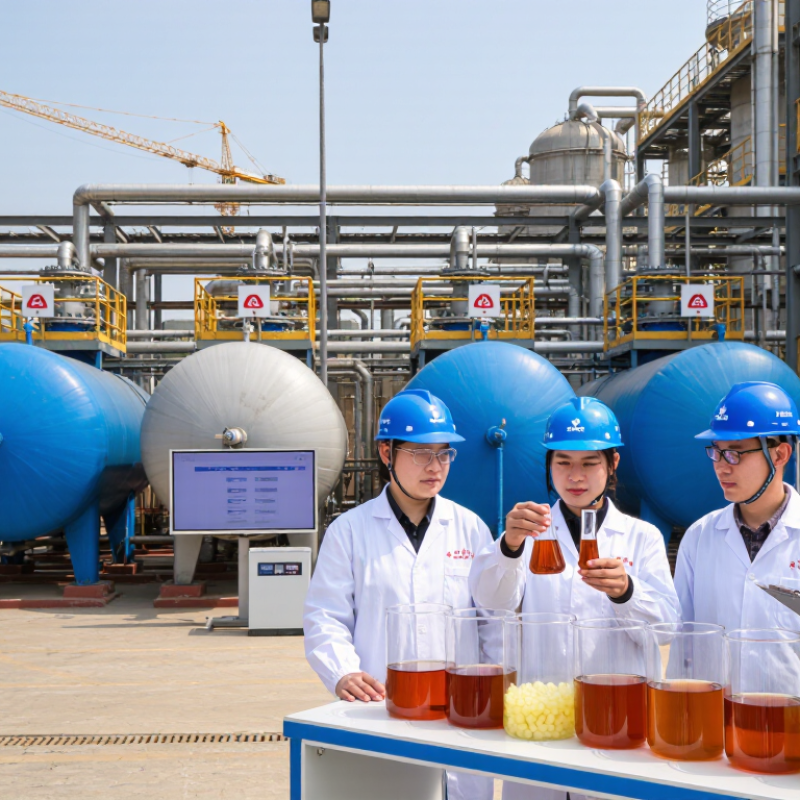
Ferric sulfate is an iron-based coagulant used to clarify wastewater. It reacts with suspended particles and dissolved pollutants. In water, it forms iron hydroxide flocs. These sticky flocs capture fine solids, phosphorus, and some organic matter. The particles then settle in a clarification tank.
Operators commonly use ferric sulfate in municipal plants, food factories, and industrial treatment systems. A typical process includes rapid mixing, gentle flocculation, and sedimentation. Dose selection depends on turbidity, phosphorus levels, alkalinity, and wastewater temperature. Jar testing is essential before full-scale application. Small dose changes can alter sludge volume and settling speed. Keep the pH under control. Poor pH adjustment may weaken coagulation and increase chemical consumption. Ferric sulfate can also make wastewater more acidic, so alkalinity may need correction. Field operators often watch floc size through a tank window, not only through laboratory data. That practical check matters.
The process creates iron-rich sludge. Its handling requires suitable dewatering equipment and regular monitoring. Ferric sulfate is effective, but it is not a universal fix. Highly variable wastewater may need polymer support or another treatment stage. Results can disappoint when testing conditions differ from plant conditions. Careful records, repeat sampling, and trained operators improve reliability.
Choosing a Chinese ferric sulfate manufacturer can improve both supply stability and treatment performance. The UN World Water Development Report 2024 states that 2.2 billion people lacked safely managed drinking water in 2022. This pressure increases demand for reliable coagulation chemicals. China’s mature chemical manufacturing network supports large-volume production, flexible packaging, and competitive export logistics. Experienced suppliers can adjust ferric content, basicity, acidity, and particle size for different wastewater conditions. These details matter in textile, municipal, mining, and industrial treatment systems.
Quality should remain the deciding factor. Ask for recent batch certificates, third-party test results, trace-metal data, and storage guidance. Confirm compliance with applicable standards, such as EN 890 or relevant national specifications. Jar testing is essential because ferric sulfate dosage changes with alkalinity, temperature, turbidity, and organic load. The World Bank reports that industrial wastewater management remains a major challenge in many developing regions. A lower quotation may reduce purchasing cost, but unstable concentration can increase sludge, chemical use, and operator workload. That trade-off is easy to overlook.
Tips: Request a 1–5 kilogram trial sample before signing a large contract. Test pH, settling speed, residual iron, and sludge volume. Check whether the supplier explains corrective actions clearly. Good documentation helps. Still, no supplier is perfect; verify every claim through independent testing and actual plant trials.
When evaluating a ferric sulfate manufacturer in China, product quality should begin with documented chemistry, not a low quotation. Check ferric iron content, acidity, density, insoluble matter, and batch consistency. EN 890:2012 and AWWA B406 provide recognized benchmarks for ferric-based coagulants used in water treatment. A credible certificate of analysis should identify the batch number, test method, production date, and retest period.
Contaminant control is equally important. NSF/ANSI/CAN 60 evaluates drinking-water treatment chemicals according to their potential contribution to regulated contaminants. Ask for recent results covering arsenic, lead, cadmium, mercury, and chromium. The World Health Organization’s 2022 drinking-water guidelines list 0.01 mg/L for arsenic and lead. These limits are for finished water, not raw ferric sulfate, but they show why impurity control matters. A supplier should explain the testing link clearly.
Compliance also depends on traceability. Request SDS documents, factory quality records, transport information, and reports from an ISO/IEC 17025-accredited laboratory. Compare at least three production batches, rather than trusting one attractive sample. That is where many evaluations become weak. Jar testing should measure turbidity removal, sludge volume, residual iron, and final-water pH under site conditions. Laboratory results can disappoint in winter. Small differences in alkalinity, storage temperature, or dosing equipment may change performance. A careful buyer records these variables before approving long-term supply.
| Evaluation Category | Quality Dimension | Recommended Acceptance Data or Benchmark | Verification Method | Why It Matters |
|---|---|---|---|---|
| Product Identity | Chemical identity | Ferric sulfate, commonly supplied as an aqueous solution or solid material. The declared form, concentration, and hydrate status should match the purchase specification and safety documentation. | Review the product specification, Safety Data Sheet, label, and Certificate of Analysis (COA). | Prevents substitution with ferric chloride, polyferric sulfate, or an incorrectly declared grade. |
| Physical Appearance | Color and visible matter | Liquid: uniform yellow to brown solution without abnormal sediment or visible foreign matter. Solid: uniform pale yellow to brown powder or granules without excessive caking. | Visual inspection of a representative, sealed batch sample under adequate lighting. | Unusual color, separation, or contamination may indicate degradation, dilution, or poor handling. |
| Active Content | Total iron concentration | Commercial liquid grades are commonly specified around 8–12% w/w as Fe; solid grades are commonly specified around 18–21% w/w as Fe. The contractual target and tolerance must be stated explicitly. | Titrimetric, spectrophotometric, or ICP-based analysis using a validated laboratory method. | Iron content directly affects dosage calculations, treatment performance, freight efficiency, and cost per unit of active iron. |
| Chemical Consistency | Ferric iron fraction | The product should be predominantly ferric iron, Fe(III), with results reported using a defined test method and unit. Any ferrous iron, Fe(II), should remain within the agreed specification. | Redox titration or another validated iron-speciation method. | Incorrect iron valence can change coagulation behavior and increase the required treatment dose. |
| Solution Properties | Density at stated temperature | Record density in kg/L at a defined reference temperature, such as 20 °C. Acceptance limits must be tied to the declared iron concentration and product formulation. | Calibrated hydrometer, pycnometer, or digital density meter. | Density is needed to convert volumetric dosing into mass dosing and to detect dilution or concentration variation. |
| Acidity and Handling | pH and free acidity | Ferric sulfate solutions are acidic. The supplier should report pH using a defined dilution or measurement condition and provide free-acidity data when required by the application. | Calibrated pH meter and an appropriate acid-base titration procedure. | Supports safe storage design, corrosion assessment, chemical dosing control, and wastewater pH adjustment planning. |
| Impurities | Insoluble matter | Set a maximum limit in the purchase specification; a practical screening requirement is no visible foreign matter and a low, consistently measured insoluble fraction. | Filtration and gravimetric determination, supported by visual inspection. | Excess insolubles can block dosing pumps, valves, strainers, and injection lines. |
| Impurities | Chloride and other anions | Chloride, sulfate balance, and other relevant anions should be reported when they affect the receiving process, corrosion risk, discharge limits, or drinking-water requirements. | Ion chromatography, titration, or another validated analytical method. | Impurity control helps prevent unintended salinity increases and site-specific corrosion or discharge problems. |
| Trace Contaminants | Heavy metals and regulated contaminants | Lead, arsenic, cadmium, mercury, chromium, nickel, and other contaminants must comply with the applicable purchasing specification and local regulatory requirements. No universal limit should be assumed. | ICP-OES, ICP-MS, or an equivalent accredited laboratory method. | Trace contaminants can restrict use in drinking-water treatment and may affect industrial discharge compliance. |
| Performance | Jar-test coagulation performance | At the target raw-water condition, the product should achieve the agreed turbidity, color, phosphorus, or suspended-solids removal at a practical dose. Results must be compared with the approved reference sample. | Standardized jar testing using representative site water, controlled mixing, settling time, and dose levels. | Chemical analysis alone cannot confirm real treatment performance because water chemistry varies by site. |
| Batch Control | COA completeness and traceability | Each batch should have a unique batch number, production date, net quantity, product form, iron content, density where applicable, test results, specification limits, and authorized release approval. | Compare the COA with container labels, delivery records, retained samples, and laboratory results. | Enables incoming inspection, complaint investigation, recall control, and consistent dosing records. |
| Quality System | Manufacturing quality management | A documented quality system, calibrated laboratory equipment, controlled test methods, deviation handling, corrective actions, and retained production records should be available. | Supplier questionnaire, document review, audit, and verification of calibration and test records. | A quality certificate is useful only when supported by operating controls and objective records. |
| Regulatory Compliance | Drinking-water approval | For potable-water applications, verify compliance with the destination market's requirements, such as NSF/ANSI/CAN 60 where applicable, together with local contaminant and product-registration rules. | Check the current certificate scope, product form, manufacturing site, concentration range, and intended-use category. | A general industrial-grade certificate does not automatically authorize use in drinking-water treatment. |
| Transport and Storage | Packaging and safety information | Containers should be compatible with acidic ferric sulfate, securely closed, correctly labeled, and accompanied by an up-to-date SDS. Transport classification must be confirmed for the actual concentration and package type. | Inspect packaging, labels, SDS revision date, emergency information, and transport documents. | Reduces leakage, worker-exposure, corrosion, and transportation risks. |
| Incoming Inspection | Sampling and release decision | Use a documented sampling plan. At minimum, check container condition, appearance, batch identity, and key active-content data; increase testing frequency when a supplier is new or results are inconsistent. | Random sampling by batch, sealed retain samples, and testing by an internal or accredited external laboratory. | Provides objective evidence that delivered material matches the approved specification. |
For a top ferric sulfate manufacturer, production capacity means more than a large reactor. Buyers need stable chemistry across every lot, even during seasonal demand. This starts with controlled raw materials, sealed processing equipment, and trained operators. Production teams should monitor iron content, basicity, acidity, moisture, and insoluble matter. Small differences matter. They can change sludge volume and settling performance.
A capable supplier should offer laboratory testing before commercial delivery. Jar tests can help wastewater engineers select a suitable dosage for municipal, industrial, or high-turbidity water. Each shipment should include a certificate of analysis, safety data, batch number, and traceable production date. Packaging also deserves attention. Moisture-resistant bags, clear labels, and secure pallets reduce handling problems. I have seen supply plans fail because packaging was treated as an afterthought.
Supply reliability requires realistic inventory planning and multiple transport options. Manufacturers should support bulk orders, trial quantities, and repeat deliveries without changing product specifications. Regional warehouses can shorten lead times, but stock claims need evidence. Technical staff should respond to dosage questions, storage concerns, and unexpected treatment results. Some suppliers promise unlimited customization too quickly. That deserves careful review. A responsible manufacturer explains what can be adjusted, what cannot, and which tests are still missing. Continuous improvement should include customer feedback, production records, and honest investigation of off-specification batches.
Selecting the best ferric sulfate manufacturer in China requires evidence, not attractive catalog claims. China’s 2023 Water Resources Bulletin reported total water use of 590.7 billion cubic meters, while industrial use reached 16.4%. Treatment efficiency matters. A reliable manufacturer should provide ferric content, basicity, insoluble matter, moisture, and heavy-metal test results for every batch.
Request recent certificates of analysis, safety data sheets, and production records. Check whether the factory follows ISO 9001 controls and can trace raw materials by batch number. AWWA B406-23 offers useful reference points for ferric sulfate quality and testing, although local project requirements may differ. Do not rely on one laboratory sample. Ask for an independent test.
Jar testing is essential. In a real plant, operators should compare dosage, pH response, turbidity removal, sludge volume, and settling time. A supplier with technical experience should explain why performance changes between river water, municipal sewage, and industrial effluent. Practical details matter, such as moisture-proof packaging, loading photos, storage guidance, and delivery temperature control.
Price still matters. But a cheaper product can create thicker sludge or higher chemical consumption. That calculation is often missed. Review the manufacturer’s monthly capacity, export experience, emergency response, and complaint process. Visit the facility when possible. No supplier is perfect, and published data can hide variability. Select the one that documents its limits, tests consistently, and accepts performance verification before long-term purchasing.
When selecting a ferric sulfate manufacturer in China, buyers should verify whether the product can support treatment targets under the applicable discharge standard. The chart shows selected Class 1A effluent limits from China’s GB 18918-2002 standard. A reliable supplier should provide consistent chemical composition, batch testing, dosing guidance, and technical support for achieving these limits.
Source: China Integrated Wastewater Discharge Standard GB 18918-2002. All values are maximum concentrations in mg/L.