Choosing China’s top plastic injection molded parts suppliers requires more than comparing unit prices. A polished factory tour can impress, but it cannot prove stable production. Buyers should examine mold design, resin control, process monitoring, inspection methods, and communication. Ask how a supplier handles a first-off sample, dimensional reports, and a mold change after approval. Those details reveal how work moves from a CAD file to a repeatable part.
John Bozzelli, an injection-molding consultant and founder of Scientific Molding, is known for the reminder, “The plastic is the boss.” The point is practical: resin behavior, part geometry, and processing conditions must work together. A supplier that discusses shrinkage, gate location, and warpage with clear examples is often more useful than one promising perfect results. Ask for evidence, not just confidence. Small details matter.
This guide looks at suppliers through a buyer’s lens: technical capability, quality systems, tooling support, production capacity, and export communication. It also considers how to compare quotes fairly, since a low mold price may leave out important items such as sampling, maintenance, or inspection. A shortlist is only a starting point. Confirm claims with drawings, sample parts, and specific questions about your project. No supplier is right for every component, and even a strong process can miss a detail. That deserves a second look.
China’s reported plastics output reached 74.885 million tonnes in 2023, a useful measure of industrial scale. It signals a deep materials and processing base, but not the volume of injection-molded parts alone. The figure may cover multiple product categories and production stages, depending on the reporting method. That distinction matters. A high national total cannot guarantee stable resin grades, tight tolerances, or reliable delivery for every order.
For buyers comparing molded-part suppliers, the number is context, not a quality score. Ask how a supplier controls resin drying, melt temperature, mold cooling, and dimensional checks. A simple example is a thin-walled housing: uneven cooling can leave warpage visible along its edge. Request sample measurements and production records, then compare them with the part drawing. Also check whether quoted capacity applies to the specific machine, mold, and shift pattern. Small details matter. China’s scale creates broad sourcing options, yet supplier performance still varies. The headline figure deserves attention, and a little caution.
Annual plastic products output reached 74.885 million tonnes, providing a measure of the scale of China’s plastics market.
Note: This figure covers plastic products output overall; it is not a separate measure of injection-molded parts. Source: National Bureau of Statistics of China, 2023.
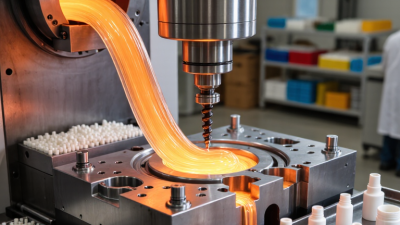
Injection molding turns small resin pellets into repeatable parts inside a precision-made tool. The resin is heated until it flows, then injected into a closed mold cavity. Drying matters for moisture-sensitive materials. Trapped moisture can cause bubbles or surface marks. Not every resin behaves alike; melt temperature and flow characteristics must match the part design.
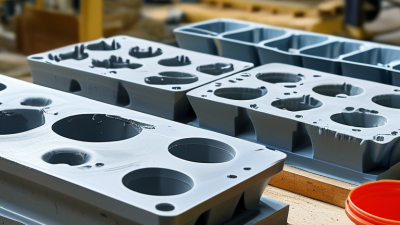
The tool’s gate directs melt into the cavity, while vents let displaced air escape. Cooling channels carry heat away, and cooling often takes the largest share of cycle time. Once the part stiffens, the mold opens and ejector pins release it. Clamping force keeps the mold halves closed against injection pressure. Too little force may allow flash along the parting line; excessive force can stress the tool. The right setting depends on projected part area, resin, and cavity layout. It is not a guess.
Cycle time includes mold closing, filling, holding pressure, cooling, and ejection. A few seconds saved may matter in high-volume production, but faster cooling is not always better. Uneven temperatures can cause warping. A supplier should verify settings with sample runs and dimensional checks. Even then, early assumptions sometimes miss real production behavior. That deserves a second look.
Choosing a supplier starts with identifying the work you need done. Custom molders focus on producing parts to your drawings, resin specifications, and volume targets.
Ask how they control wall thickness, gate marks, and color variation. A sample part can reveal more than a polished capability sheet.
Fit matters.
Toolmakers specialize in mold design, machining, and maintenance. They are a strong fit when tooling ownership, cycle time, or future revisions matter.
Check whether the quote includes mold trials, spare inserts, and maintenance records. These details affect downtime, but are easy to overlook.
Not every low tooling quote is a good deal.
Turnkey OEM partners combine tooling, molding, assembly, and packaging under one program.
PlasticsEurope’s Plastics—The Fast Facts 2023 reports 400.3 million tonnes of global plastics production in 2022; that figure covers all plastics, not injection-molded parts alone.
China’s National Bureau of Statistics reported 74.885 million tonnes of plastic products in 2023, down 3.9% year over year.
These broad figures show scale, not supplier quality. Compare providers using part-specific evidence: dimensional inspection results, trial-run samples, and clear responsibility for defects.
Small details count.
China Top Plastic Injection Molded Parts Suppliers?
When comparing Chinese injection molding suppliers, treat ISO 9001 and IATF 16949:2016 as different levels of evidence, not interchangeable badges. ISO’s 2022 Survey recorded 1,265,216 valid ISO 9001 certificates worldwide. The scale is striking, but certification alone does not prove that a supplier can hold tight dimensions or prevent molding defects.
For automotive parts, IATF 16949 adds sector-specific controls, including production process monitoring, traceability, and corrective action. Ask whether the certificate covers the actual molding site and relevant processes. Then review recent audit findings, control plans, material records, and sample inspection data. A useful detail: request measurements from several cavities, not just one approved part. That matters.
A supplier holding both certificates may offer stronger documented controls, but the documents still need testing against your part and production volume. Check how the team handles resin changes, mold maintenance, and dimensional drift across shifts. The ISO Survey counts certificates, not factory performance; IATF certification also cannot guarantee defect-free output. A missed question is easy: how quickly does the supplier contain and report a nonconforming batch? Ask for evidence, and verify it during a site or process review.
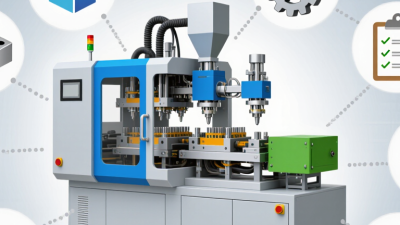
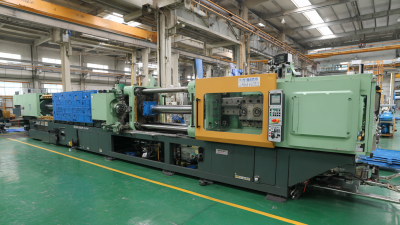
When comparing plastic injection molded parts suppliers, verify production capacity with records, not brochure figures. ISO 20430:2020 addresses safety requirements for injection moulding machines; it is not a general certification of a supplier’s product quality or delivery performance. Ask which presses will run your mold, and check their clamping force, tie-bar spacing, shot capacity, and mold dimensions. A press may have enough tonnage on paper but still be unsuitable for the tool.
Tonnage should match the part’s projected area, resin, and expected cavity pressure. Request the calculation and confirm it against actual production data. For cavitation, distinguish the mold’s total cavities from the cavities routinely used. Run the mold. Review cycle-time records, scrap trends, and samples from a sustained production run, not one polished trial. PPAP evidence may include dimensional results, material certifications, process flow, control plans, capability studies, and approval records. Requirements vary by customer, so check the agreed submission level and revision history. A neat file is not proof by itself. I would also verify that measured parts can be traced to the press, mold, material lot, and inspection date; this detail is easy to miss during a rushed supplier review.
| Qualification area | What to verify | Evidence to request | How to assess |
|---|---|---|---|
| Machine safety | Whether relevant injection molding machines are designed and safeguarded against applicable hazards. | Machine list, safety documentation, risk-assessment records, and photos or an audit of guarding and interlocks. | ISO 20430:2020 specifies safety requirements for injection molding machines. It is not, by itself, a supplier quality-management-system certification. Verify the machine and site evidence directly. |
| Clamping force (tonnage) | Available clamping-force range and whether the proposed machine can run the specific mold and material. | Machine nameplate or equipment register; mold layout; projected-area and process calculations; trial-run records. | Do not use tonnage alone as a capacity score. Confirm the required force using the part and runner projected area, material, cavity pressure, mold design, and process conditions; have the supplier document its calculation and assumptions. |
| Cavity count and output | Actual cavities in the production mold, planned cavities per cycle, cycle time, and expected good-part output. | Approved mold drawing, cavity identification, trial report, cycle-time data, and production-capacity calculation. | Compare quoted output with demonstrated production data. Account for downtime, scrap, changeovers, maintenance, and the order schedule; distinguish theoretical output from proven good-part capacity. |
| Part and mold fit | Compatibility of the mold with machine platen dimensions, tie-bar spacing, mold thickness, shot capacity, and injection unit. | Machine specifications, mold dimensions and weight, shot-size calculation, and mold-trial records. | Check all critical machine–mold interfaces, not only clamping force. Confirm the proposed machine can safely mount the mold and process the specified resin and part geometry. |
| Material control | Traceability and control of resin grade, colorants, regrind, drying, and material changes. | Approved material specification, supplier certificates or test documentation, lot records, storage and drying instructions, and change-control procedure. | Match delivered resin and processing conditions to the approved specification. Define whether regrind is permitted and how material substitutions require approval. |
| PPAP readiness | Ability to prepare the production-part approval records required by the customer and applicable automotive requirements. | As applicable: design records, process flow, PFMEA, control plan, measurement-system analysis, dimensional results, material or performance test results, sample parts, and Part Submission Warrant. | PPAP requirements depend on the customer, submission level, and applicable requirements. Agree the required deliverables and approval status before production; do not treat a document list as proof of customer approval. |
| Measurement and capability | Ability to measure specified characteristics with suitable equipment and demonstrate process performance when required. | Inspection plan, calibrated equipment records, measurement-system studies where required, dimensional reports, and capability studies for agreed characteristics. | Confirm sampling plans, methods, tolerances, and acceptance criteria with the customer. Review the actual data and study conditions rather than relying on an unsupported capability claim. |
| Production and delivery capacity | Available production time, shift pattern, planned maintenance, secondary operations, and ability to meet forecast demand. | Capacity calculation tied to the proposed machine and mold, recent production records, staffing plan, maintenance schedule, and contingency plan. | Validate assumptions for cycle time, operating hours, yield, and downtime. Separate reserved capacity from uncommitted or theoretical capacity. |
| Supplier comparison record | A consistent, evidence-based comparison across shortlisted suppliers without relying on unverified claims. | Completed audit checklist, reviewed records, sample or trial results, open-issue log, and customer-specific approval status. | Record each item as verified, pending, or not applicable, with the evidence source and review date. Confirm current capability through an audit or production trial before award. |