
China’s ring main unit market deserves careful comparison, not a quick ranking. A Rmu Electrical Panel helps distribute medium-voltage power across compact networks, including factories, commercial buildings, and utility substations. Inside a substation, its sealed compartments, operating mechanism, and cable connections must work as one system. Small design differences can affect installation, maintenance, and reliability.
The International Energy Agency’s Electricity 2025 report estimates that global electricity demand grew by about 4.3% in 2024. That figure describes electricity demand, not RMU sales, but it highlights the pressure on distribution networks. IEA Executive Director Dr. Fatih Birol has described the transition as entering “the Age of Electricity.” The phrase captures a broad trend, not a product endorsement. The margin is thin.
This guide examines Chinese manufacturers through practical criteria: rated voltage, short-circuit performance, insulation technology, testing records, customization, and after-sales support. Buyers should also check whether published specifications match the exact configuration offered. A catalog rating alone cannot prove performance at a project site. Details matter.
No single list can replace application-specific engineering review. Manufacturer capabilities change, and available public information may be incomplete. This introduction sets a comparison framework; it does not claim that every supplier suits every project. The strongest shortlist starts with transparent test documentation and clear answers about service life, spare parts, and commissioning support.
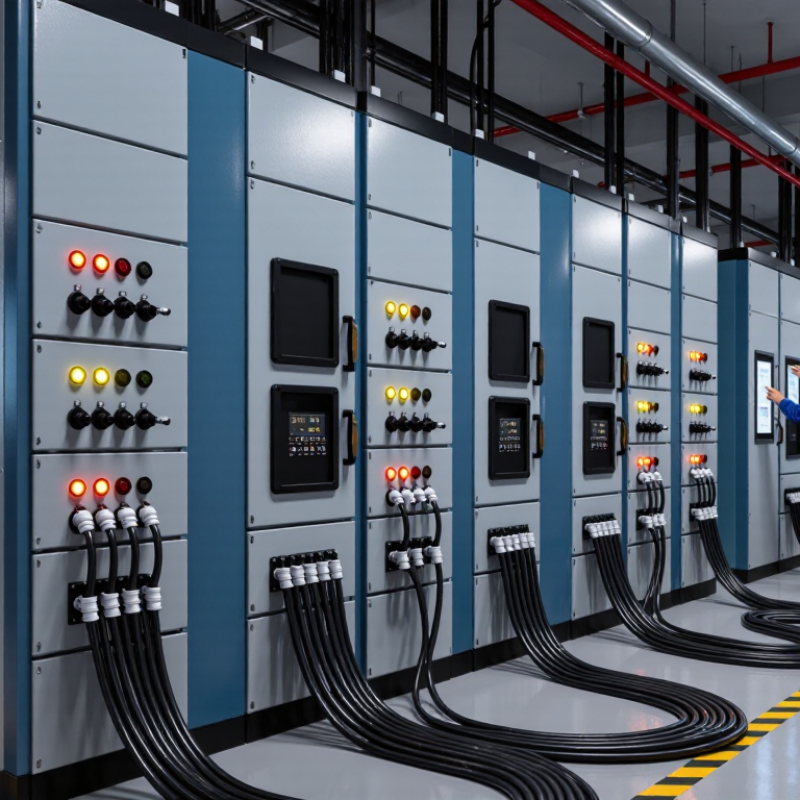
An RMU electrical panel, more accurately called a ring main unit, is compact medium-voltage switchgear used in local power distribution. It connects incoming and outgoing cables with a transformer feeder, often inside a metal enclosure. Typical units contain load-break switches, circuit breakers or fuses, and earthing switches. The exact arrangement depends on the network and required protection. That detail matters.
In a ring network, an RMU can help isolate a faulty cable section while other sections remain supplied, if the network design allows it. Inside a substation, technicians check cable terminations, switch positions, interlocks, and equipment labels during commissioning. A drawing should show which feeder serves each transformer; unclear labels can slow fault response.
The word “panel” can be misleading, since an RMU is a coordinated switchgear assembly, not just a row of controls. Insulation methods and ratings vary, so selection depends on site voltage, load, fault level, and operating conditions. Installation and maintenance require trained personnel and the correct procedures. Even a compact cabinet needs careful planning for cable access and safe operation.
RMU panels support electrical distribution by controlling how power moves through a ring network. Their compact metal enclosures commonly combine switching, isolation, and protection functions. If a cable section develops a fault, operators can isolate that section and restore supply through another route, where the network design allows. Faults happen. This flexibility can limit the area affected, but it depends on correct protection settings and operating procedures.
In a building or industrial site, an RMU may sit in a dedicated electrical room, linking incoming feeders to transformers and outgoing circuits. Clear labels help technicians identify each switch position during routine checks. Panel selection should match the system voltage, fault level, load, installation environment, and expected expansion. Gas-insulated and air-insulated designs have different space and maintenance considerations. A compact panel is useful, but cramped access can make inspection harder. That trade-off deserves attention.
Tips: Check operating diagrams against the installed wiring, keep switching records current, and follow the manufacturer’s maintenance instructions. Confirm earthing and interlocks before operation. Never assume the panel’s condition from its appearance alone.
Choosing an RMU supplier in China should start with verifiable engineering evidence, not catalogue claims. A neat brochure proves little. Check rated voltage, short-time withstand current, internal-arc classification, ingress protection, and operating conditions.
IEC 62271-200 covers metal-enclosed switchgear above 1 kV and up to 52 kV; confirm the proposed unit’s ratings match your project.
Ask for type-test reports from an accredited laboratory, and check that the tested model matches the offered configuration. Review routine-test records linked to serial numbers, including insulation and mechanical-operation results. The IEA’s 2023 report, Electricity Grids and Secure Energy Transitions, says annual grid investment needs to rise from about $300 billion to over $600 billion by 2030. That wider demand makes production capacity worth checking, but capacity claims need evidence.
Request factory-audit records, delivery references, spare-parts availability, and written service response times. Inspect sample drawings and terminal layouts against the site cable plan; a small mismatch can delay installation. Ask how the enclosure handles humidity, corrosion, and temperature swings. One point is easy to overlook: a certificate may cover a different switchgear variant. Have an independent engineer verify the documents and configuration before placing an order.
Leading RMU electrical panel manufacturers in China serve utility, infrastructure, and industrial projects with medium-voltage equipment. Their product ranges may include ring main units with load-break switches, circuit breakers, metering sections, and different insulation options. The right configuration depends on network voltage, fault levels, operating conditions, and maintenance access. Details matter.
A capable manufacturer should explain its design choices clearly and provide relevant test documentation, drawings, and routine inspection records. Buyers can check enclosure materials, busbar ratings, protection functions, and the accessibility of cable compartments. Factory audits can also reveal practical details, such as assembly controls and how finished units are inspected. A polished catalog alone is not enough.
Not always. A low quotation may exclude installation support, spare parts, or commissioning guidance, so compare the full scope. Ask how the supplier handles customization and delivery changes, and confirm that project requirements are reflected in the final drawings. Certification claims should be checked against the equipment and applicable project specifications. No single checklist removes all risk; even a well-documented supplier may need closer review when the site has unusual space, climate, or service constraints.
When comparing RMU electrical panel manufacturers in China, match each offer to your project’s actual operating conditions. Check rated voltage, current, short-circuit withstand, insulation level, and enclosure requirements. Ask for type-test reports and confirm that the tested model and configuration match the equipment being quoted. A document can look convincing yet describe a different setup. Details matter.
Review credentials by checking their scope, issuing body, dates, and product coverage. A quality certificate alone does not prove that a specific RMU has passed relevant performance tests. Request the factory’s inspection records, component traceability process, and sample test documentation. If possible, arrange a factory audit or independent inspection before shipment. Compare drawings, delivery schedules, warranty terms, spare-parts availability, and technical support in writing. Some details may be overlooked in early discussions; clarify them before approving production.
Tips: Ask for a sample serial-number record and one completed inspection report. Verify report numbers with the issuing laboratory where practical. Speak with references about installation support and response times. Keep a comparison sheet, but leave room for technical questions; the lowest price is not always the clearest offer.