What Is a Plastic Injection Molding Mold?
A plastic injection molding mold is the engineered tool that gives molten polymer its final shape. It contains machined cavities, cores, runners, gates, cooling channels, and an ejection system. During production, heated plastic fills the cavity under pressure, cools against steel surfaces, and leaves as a repeatable component.
The scale is significant. Grand View Research estimated the global injection molded plastics market at approximately USD 387.5 billion in 2023. Its report also projects continued growth through 2030, driven by packaging, automotive, medical, and consumer products. In the United States, the Plastics Industry Association’s 2023 Size and Impact report attributed USD 548.1 billion in economic output to the plastics industry during 2022. These figures show why mold performance affects more than one factory line.
Details matter. A polished cavity can improve appearance, while poorly balanced cooling may create warpage near a thin wall. A gate placed too close to a visible surface can leave an unwanted mark. Mold steel, tolerances, vent depth, cycle time, and maintenance records all influence reliability. Experience on the shop floor often reveals problems that drawings hide.
Still, one assumption deserves correction. A mold is not merely a metal container. It is a thermal, mechanical, and production system. Even sophisticated simulation cannot remove every uncertainty, especially when material batches, humidity, or machine settings change. Understanding what a plastic injection molding mold does requires both design knowledge and practical observation. Small details decide large production results.
Definition and Purpose of a Plastic Injection Molding Mold
What Is a Plastic Injection Molding Mold?
Definition and Purpose of a Plastic Injection Molding Mold
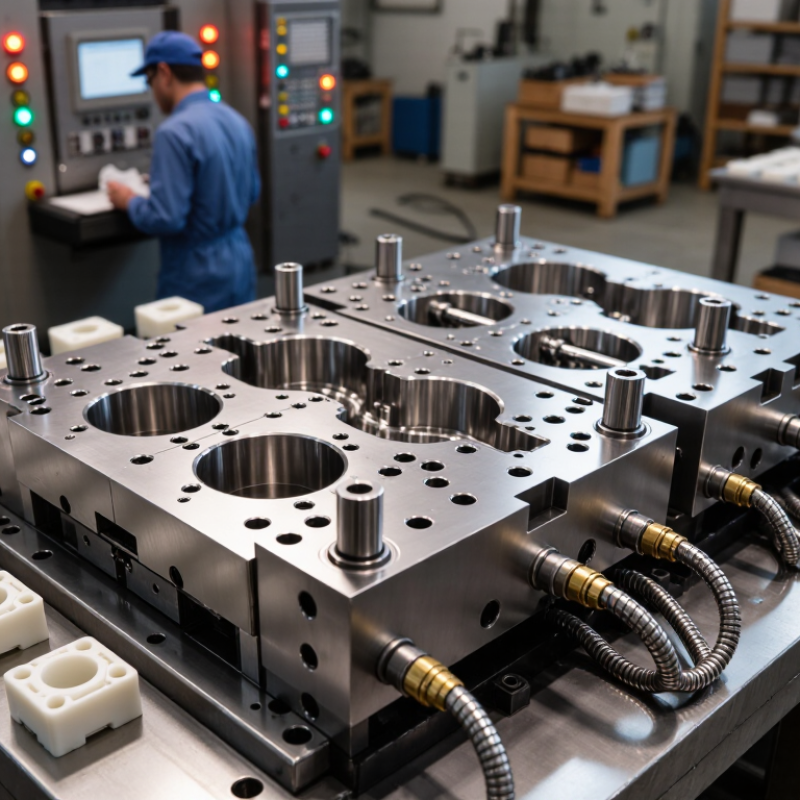
A plastic injection molding mold is a precision tool that shapes heated plastic into a designed part. It contains a cavity, which forms the outside surface, and a core, which shapes internal features. During production, the mold closes under pressure before molten plastic enters through a controlled gate. After cooling, the mold opens and ejector pins release the finished component.
Its purpose is more than creating a shape. It controls dimensions, surface texture, cooling behavior, and production repeatability. A well-designed mold may include cooling channels, guide pins, vents, and replaceable inserts. These details help reduce warping, trapped air, and visible flow marks. In my experience, small venting problems can create surprisingly large defects.
Mold selection depends on the plastic material, part geometry, expected volume, and required tolerance. A simple part may use a two-plate mold, while complex parts can require slides or lifters for undercuts. Mold steel must also withstand repeated heat, pressure, and abrasion. Maintenance matters. Even a strong mold can lose accuracy when vents clog or surfaces wear.
No mold is perfect. A design that looks efficient on paper may cause slow cooling in production. Trial molding, measurement, and careful adjustment remain necessary. Engineers should inspect sample parts rather than trust drawings alone. That practical step often reveals problems hidden inside the mold.
What Is a Plastic Injection Molding Mold? - Definition and Purpose of a Plastic Injection Molding Mold
| Dimension | Definition or Typical Information | Purpose in the Injection Molding Process |
|---|---|---|
| Basic definition | A plastic injection molding mold is a precision tool containing one or more cavities that shape molten plastic into a defined part. | It determines the molded part’s geometry, surface texture, dimensional features, and repeatability. |
| Main mold halves | The mold generally consists of a stationary half and a moving half, which close together around the cavity. | The two halves create a sealed molding space and allow the finished part to be removed after cooling. |
| Cavity and core | The cavity forms the external surfaces, while the core forms internal surfaces, openings, and recessed features. | Together, they reproduce the negative and positive features of the intended component. |
| Mold base | The mold base supports the cavity plates, core plates, guide components, cooling lines, and ejection system. | It provides structural strength and maintains accurate alignment during repeated clamping cycles. |
| Runner system | Runners are channels that carry molten plastic from the sprue or manifold toward one or more gates. | They distribute the melt to the cavity while influencing pressure loss, filling balance, and material waste. |
| Gate | A gate is the smaller entry passage through which molten plastic flows from the runner into the cavity. | Gate location and size affect filling behavior, weld lines, shrinkage, vestige location, and appearance. |
| Cooling system | Cooling channels circulate a liquid, commonly water, through the mold plates near the cavity and core. | Cooling removes heat, solidifies the plastic, controls cycle time, and helps reduce warpage. |
| Ejection system | Ejector pins, sleeves, plates, or air-assisted devices push the cooled part away from the core. | It removes the part without excessive deformation, sticking, or surface damage. |
| Guiding and alignment | Guide pins, bushings, and locating features align the mold halves during closing. | Accurate alignment protects the parting surfaces and helps maintain consistent part dimensions. |
| Venting | Small vents allow trapped air and process gases to escape from the cavity as plastic fills it. | Proper venting helps prevent burns, short shots, air traps, and incomplete filling. |
| Common mold materials | Mold components are commonly made from tool steels, stainless steels, or aluminum alloys, depending on production needs. | Material selection balances wear resistance, corrosion resistance, thermal conductivity, machinability, and service life. |
| Compatible plastic materials | Injection molding can process thermoplastics such as polypropylene, polyethylene, ABS, polycarbonate, nylon, and many engineering polymers. | The selected polymer determines required melt temperature, mold temperature, shrinkage allowance, and mold design considerations. |
| Basic operating sequence | The mold closes, plastic is injected, holding pressure is applied, the part cools, the mold opens, and the part is ejected. | The sequence converts plastic pellets into repeatable molded parts through controlled heating, pressure, cooling, and removal. |
| Cavity count | A mold may contain one cavity or multiple cavities, depending on part demand, machine capacity, and tooling economics. | Additional cavities can increase output per cycle but require balanced filling and more complex tooling. |
| Parting line | The parting line is the boundary where the mold halves meet and separate. | Its placement affects part appearance, flash control, draft requirements, and ease of ejection. |
| Primary purpose | The mold provides a controlled cavity in which molten plastic is formed, cooled, and released as a finished component. | Its overall purpose is to produce accurate, repeatable, and cost-effective plastic parts at the required production volume. |
Related Posts
-
10 Plastic Injection Manufacturing Tips for Global Buyers
-
Why Is Plastic Injection Tooling Essential for Manufacturing?
-
Top 10 Tips to Optimize Your Injection Moulding Process?
-
Why Choose Plastic Injection Moulding Process for Your Products?
-
Top Tips for Successful Plastic Injection Molding Process?
-
China Best Injection Molding Design Solutions for Global Buyers?