What Are Injection Machines and How Do They Work?
From a tiny connector housing to a reusable food container, molded parts begin as plastic pellets and take shape inside a mold. Injection machines make this transformation repeatable. They heat and plasticize polymer, push the melt into a closed mold, hold pressure, then cool and eject the part. The cycle sounds simple. Control is not.
PlasticsEurope’s 2024 report, Plastics—The Fast Facts, estimates global plastics production at 413.8 million tonnes in 2023. That figure covers all plastics production, not injection molding alone, but it indicates the scale of material processing behind modern manufacturing. Grand View Research estimated the global injection molding machine market at USD 10.6 billion in 2023, reflecting the importance of this equipment sector.
This guide explains the hopper, heated barrel, screw or plunger, clamping unit, mold, and controls—and how they work together during a production cycle. It also compares hydraulic, all-electric, and hybrid designs, whose precision, energy use, speed, and maintenance needs vary by application. A machine can repeat a cycle; it cannot rescue every poor setup. Moisture-sensitive resin, unstable melt temperature, worn tooling, or incorrect clamp force can cause visible defects, even without an alarm. Understanding the process helps engineers, buyers, and operators ask better questions about part quality, cycle time, material choice, and operating costs. Actual settings should come from material data, machine manuals, and validated trials—not guesswork.
What an Injection Machine Is and What It Produces
What Are Injection Machines and How Do They Work?
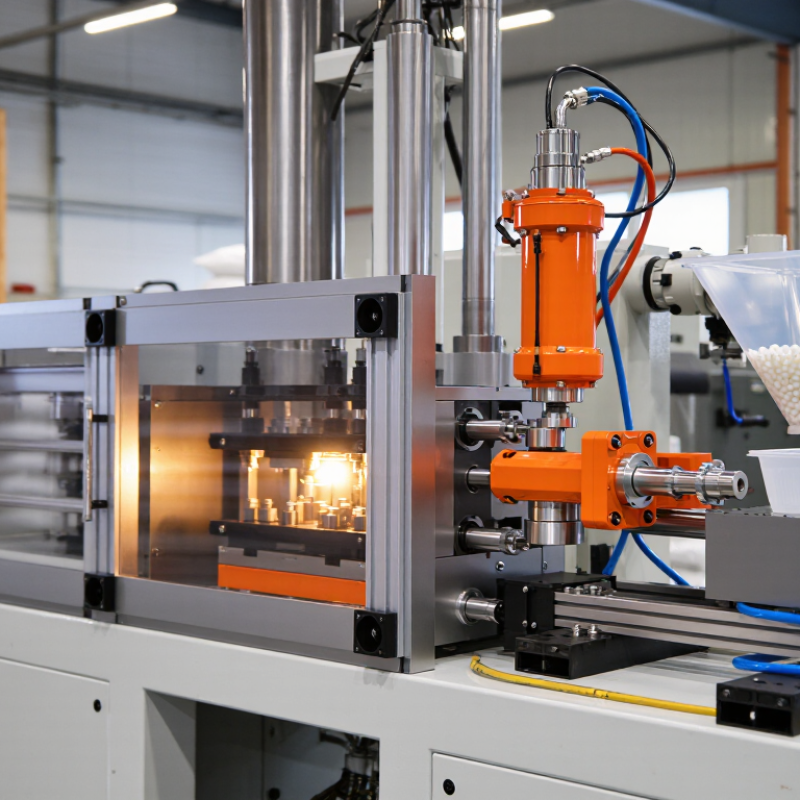
An injection machine converts raw plastic pellets into precise molded products. It heats the material inside a barrel until it becomes fluid. A rotating screw then pushes the melt into a closed mold under controlled pressure. The mold gives the material its final shape, such as a bottle cap, appliance housing, medical tray, or automotive connector.
The machine has several working sections. The hopper stores the pellets. The barrel and heater bands soften them. The screw mixes and moves the material forward. A clamping unit keeps the mold shut during injection. After filling, the part cools against the mold surface. Ejector pins then release it. That detail matters. Uneven cooling can create warping, sink marks, or visible stress lines.
In practical production, operators adjust temperature, injection speed, pressure, and cooling time. Small changes can affect surface gloss, dimensions, and cycle length. Material moisture also matters, especially with engineering plastics. A damp batch may produce bubbles or weak areas. It is easy to blame the machine, but mold design and material handling often cause the real problem. Some parts need thicker walls, while others require ribs or carefully placed gates. These choices reduce waste, yet they can complicate filling. Injection molding is highly repeatable, but it is not automatic perfection. Careful testing remains necessary.
What Are Injection Machines and How Do They Work? — What an Injection Machine Is and What It Produces
| Machine Configuration | How It Works | Common Materials | Typical Products | Common Applications |
|---|---|---|---|---|
| Hydraulic injection molding machine | Hydraulic pumps and cylinders move the screw, close the mold, and provide clamping force. The screw melts and meters plastic before injecting it into the mold. | Thermoplastics such as polypropylene, polyethylene, ABS, and polycarbonate; the exact range depends on the machine and processing setup. | Containers, housings, closures, and larger molded components. | General-purpose molding, including products that need substantial clamping force. |
| All-electric injection molding machine | Electric servo motors drive functions such as screw rotation, injection, and mold movement. These machines use electric drives rather than hydraulic actuators for their main motions. | Many commonly molded thermoplastics, including ABS, polypropylene, and polycarbonate, when matched to suitable tooling and process settings. | Small precision parts, electronic enclosures, connectors, and consumer-product components. | Applications that benefit from repeatable motion and precise process control. |
| Hybrid injection molding machine | Combines electric drives for selected movements with hydraulic systems for other functions, such as providing clamping force. | A range of thermoplastics; material compatibility depends on the machine’s screw, barrel, temperature controls, and mold. | Packaging parts, appliance components, and general industrial molded parts. | Production where a combination of electric control and hydraulic force is suitable. |
| Vertical injection molding machine | Uses a vertical clamping layout. Some models allow inserts to be placed in the mold before plastic is injected around or onto them. | Thermoplastics selected for the part and insert; compatible inserts may include metal components. | Overmolded handles, electrical connectors, and parts with embedded inserts. | Insert molding and applications where vertical mold access is useful. |
| Multi-component injection molding machine | Uses two or more injection units to inject different materials or colors into one mold, either in sequence or through coordinated injection. | Compatible combinations of thermoplastics, such as a rigid substrate with a softer elastomer; material pairing must be validated. | Two-color buttons, soft-grip handles, and parts combining rigid and flexible sections. | Products that need multiple colors or materials in a single molded part. |
Basic operating cycle: The machine clamps the mold, melts and injects material into the cavity, holds pressure while the material cools or solidifies, opens the mold, and ejects the finished part. The mold determines the part’s shape; the machine supplies the controlled force and movement needed to fill it. Many injection machines process thermoplastics, while specialized equipment is used for other materials and processes.
Related Posts
-
China Top Injection Machines Manufacturers Which One Is Best?
-

How to Optimize Your Injection Molding Tooling Processes for Maximum Efficiency
-
Why Is Mold Manufacturing Essential for Quality Product Development?
-
Why Choose Plastic Injection Moulding Process for Your Products?
-
Top 10 Tips to Optimize Your Injection Moulding Process?
-
Top 10 Benefits of Plastic Injection Manufacturing for Buyers?